
Anker 778 Thunderbolt Docking Station Review
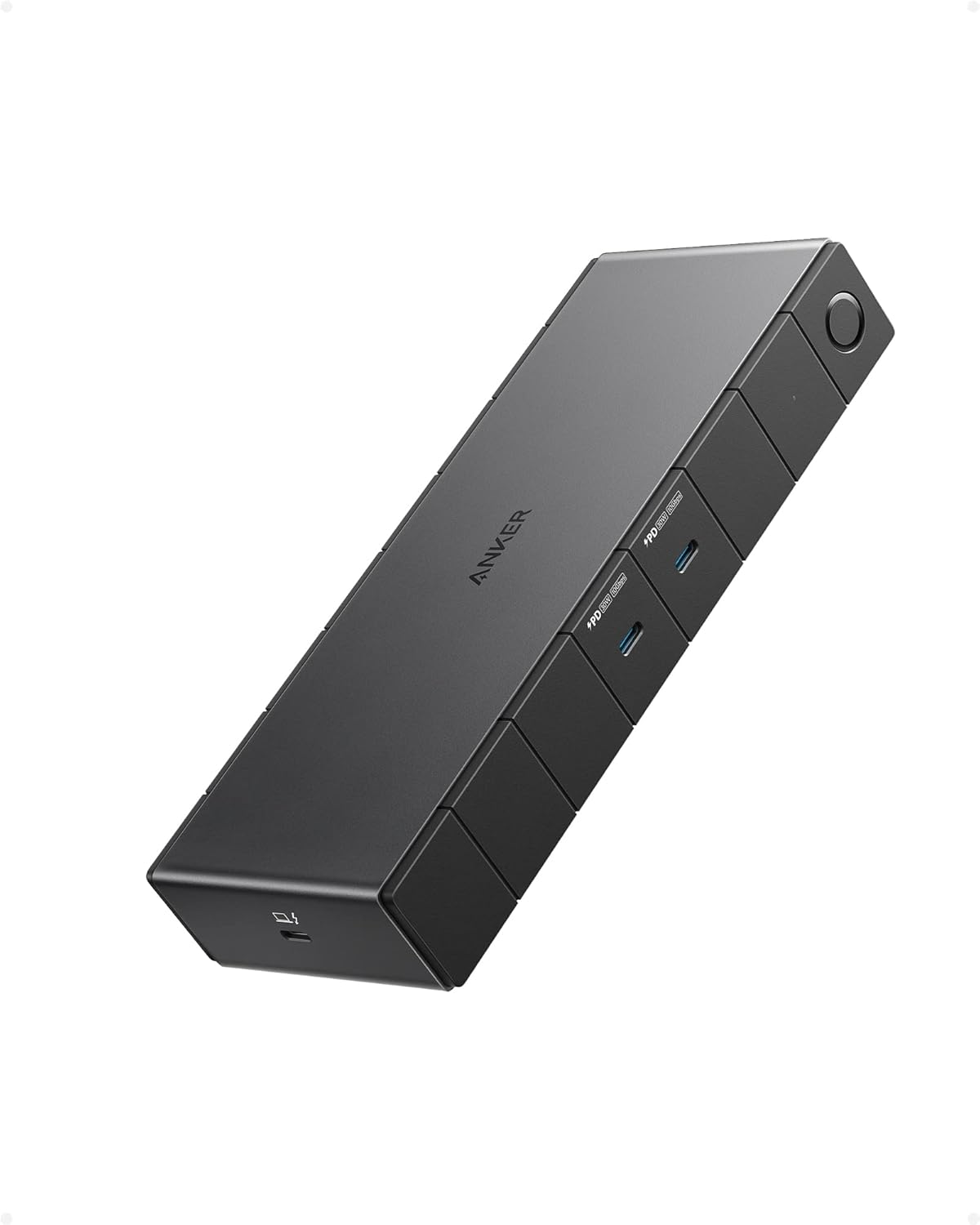
Streamline your desk chaos with Anker 778 Thunderbolt Docking Station. This 12-in-1 tech marvel simplifies connectivity, making tangled cables a thing of the past.
Do you ever find yourself wondering how to solve the tangled web of devices and cables at your desk? I’ve been there too. Sifting through a pile of charging cables, USB connectors, and various other peripherals can make anyone’s head spin. But fear not, the Anker 778 Thunderbolt Docking Station (12-in-1, Thunderbolt 4) has waltzed into the chaos of modern desk life and come out on top—not unlike a matador at a bullfight, elegantly sidestepping impending disaster.

The Need for a Docking Station
In our multifaceted digital world, having a centralized hub like this docking station can truly be a lifesaver. Imagine being able to connect all your essential devices to your laptop with a single connection; it’s like having a smart assistant that actually works all the time, unlike some electronic assistants who shall remain nameless for now. From connecting extra monitors to keeping your devices charged, docking stations handle it all. And why do we need so many ports? Because, my dear friends, our technological landscape is more varied than my uncle’s collection of Hawaiian shirts.

Anker 778 Thunderbolt Docking Station (12-in-1, Thunderbolt 4), 40 Gbps with Max 100W Charging for Laptop, Single 8K, Quad 4K Display, Ethernet, 6 USB Ports for Dell, HP Laptops and More(Gray)
Key Features and Benefits
12-in-1 Expansion
What really grabbed my attention about the Anker 778 is its 12-in-1 expansion capabilities. This means it’s like the Swiss Army knife of docking stations. Packaged neatly within its sleek design are multiple ports—each with its own distinct role. There’s a 100W max Thunderbolt 4 upstream port, a Thunderbolt 4 downstream port, two USB-C ports with 10 Gbps and 30W charging, two 5 Gbps USB-A ports, and two 480 Mbps USB-A ports. It even has an Ethernet port, an HDMI 2.1 port capable of 8K, and two DisplayPorts.
Just imagine a world where spaghetti only refers to the pasta on your plate and not the mess of cords at your feet. Here’s a breakdown of these impressive options:
| Port Type | Data Transfer Speed | Charging Capability | Special Features |
|---|---|---|---|
| Thunderbolt 4 Upstream | 40 Gbps | 100W max | Single 8K Display |
| Thunderbolt 4 Downstream | 40 Gbps | – | – |
| USB-C (two ports) | 10 Gbps | 30W charging | – |
| USB-A (two 5 Gbps ports) | 5 Gbps | – | – |
| USB-A (two 480 Mbps ports) | 480 Mbps | – | – |
| Ethernet | – | – | Wired Connection |
| HDMI 2.1 | – | – | Support 8K Display |
| DisplayPorts (two) | – | – | – |
Powered by Thunderbolt 4
You know that jolt of energy you get after a morning coffee? That’s what Thunderbolt 4 is to your devices. With an upstream bandwidth of 40 Gbps, it does the heavy lifting so you don’t have to. You can display media to a single monitor in uber-crisp 8K, also transferring files at the same blistering speed of 40 Gbps. I had to double-check those numbers to make sure I wasn’t confusing gigabits with giggles, because this is a seriously powerful feature.
All-in-One Charging
The disenchanted groans of searching for your laptop charger will be a thing of the past. The Anker 778 is here to ensure your devices are all perpetually ready for action. While offering up to 100W max charging via Thunderbolt 4, it can potentialize charging for the rest of your empire. The two USB-C ports dish out a respectable 30W per connection, keeping everything from phones to tablets well-juiced.
Expand Your Display Options
For anyone who’s ever squinted at a laptop screen, you’ll understand the luxury of multiple displays. While it can localize a single display in up to 8K glory, you can also configure up to four displays in 4K. Now that’s a visual story even my mother would approve of—a woman who keeps giving everyone a framed picture of me every holiday.
Setup and User Experience
Straightforward Setup
Setting up the Anker 778 is like a breath of fresh air. There’s nothing more satisfying than ease of use from a tech product. You simply plug it in, and it starts to work its magic, sparing you from a labyrinth of settings. Plus, it comes with an 180W power adapter and a 2.3 ft Thunderbolt 4 cable, ensuring you have everything you need right out of the box.
Customer Experience
Alongside the technological pizzazz, Anker offers a welcome guide to get you started. Additionally, it provides an 18-month warranty. It’s always comforting to know you’re not alone. If anything goes astray, Anker customer service is ready to assist you. Reminds me of that one time my cousin’s bad karaoke was heard by the entire neighborhood—unlike technical hiccups, there was no friendly customer service there.
Compatibility and Limitations
Compatible Devices
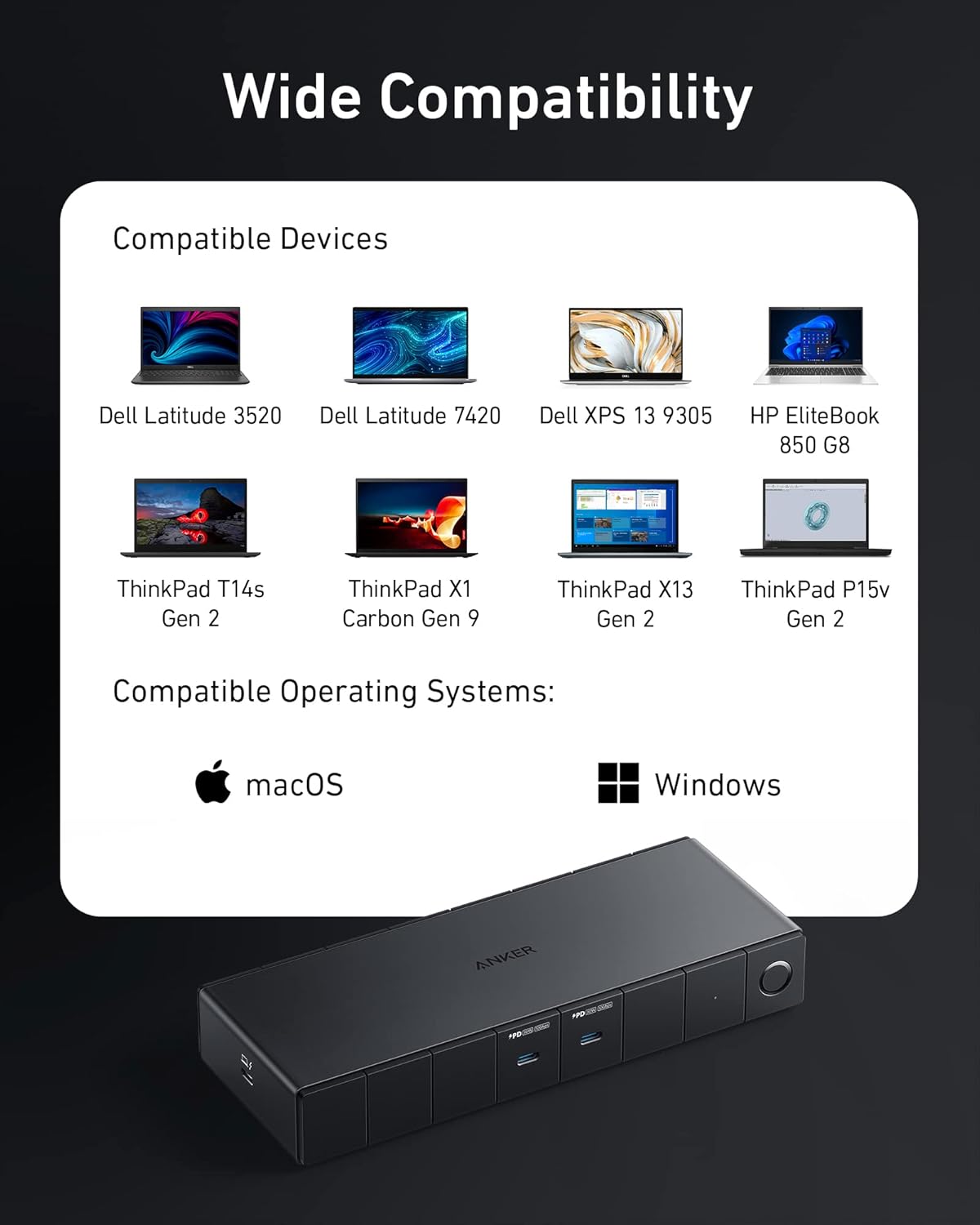
The little hiccup comes when we discuss compatibility. This docking station is a great mate for Dell, HP laptops, and similar; however, it’s not compatible with M1/M2 MacBooks or Asus laptops with an AMD CPU. It’s like the Anker 778 knows its boundaries and stands firm—funny for an inanimate object to have firmer personal boundaries than some humans I know.
Future-proof Your Setup
Despite a few compatibility caveats, the Anker 778 is built for the future. It is quintessentially future-proof, thanks to Thunderbolt 4. Ensuring you’re equipped technologically for what lies ahead is kind of like bringing extra sunscreen for that surprise beach outing—wise and oddly comforting.
Final Thoughts
In my endless quest for workspace nirvana, the Anker 778 Thunderbolt Docking Station definitely makes the cut. With 12-in-1 expandability, all-in-one charging, and powerful Thunderbolt 4 technology, it’s like inviting a professional organizer to my workspace and watching the clutter dissipate like smoke in the wind. If you’re aiming to simplify and supercharge your work setup, this may very well be the anchor you’ve been waiting for.
So, what are you waiting for? Streamline your space and let the marvel of connectivity sweep you off your feet. Or, more practically, help you manage your devices more efficiently, while preserving a nice amount of sanity along the way.
Disclosure: As an Amazon Associate, I earn from qualifying purchases.
Docking Station Intelligence
The standards are confusing by design. These three panels decode what manufacturers won’t explain clearly. Applicable to every docking station.
The USB-C Confusion Matrix
The USB-C connector is the single greatest source of buyer confusion in docking stations. The physical plug looks identical whether it carries USB 2.0 at 480 Mbps or Thunderbolt 5 at 120 Gbps — a 250x difference in capability hidden behind the same shape. Manufacturers exploit this by labeling everything "USB-C compatible" without specifying which protocol runs through it. Two docks can look identical on the outside and behave completely differently once you plug them in.
The hierarchy matters because it determines everything: how many monitors your dock can drive, how fast files transfer, whether your laptop charges while docked, and whether you need third-party drivers. Here is the real capability ladder, from slowest to fastest:
The practical takeaway: if your laptop has Thunderbolt 4, buy a Thunderbolt dock. If it only has generic USB-C, verify whether it supports DisplayPort Alt Mode before buying anything with multi-monitor claims. Our buying guide walks through verification steps for every major laptop brand.
Power Delivery: What the Watts Mean
Power Delivery (PD) determines whether your docking station can charge your laptop while you work, or whether you need a separate charger cluttering your desk. The math is simple but rarely explained: your laptop draws a specific wattage under load, and the dock must match or exceed it. If the dock delivers less than your laptop needs, the battery slowly drains even while plugged in — defeating the purpose of a docking station entirely.
Most ultrabooks need 45–65W. Standard business laptops need 65–100W. Gaming and workstation laptops can demand 100–140W or more. The dock’s advertised PD wattage is the maximum it can deliver to your laptop — but this drops if you charge other devices (phones, tablets) through the dock simultaneously. Always leave a 15–20W margin above your laptop’s requirement.
Check your laptop’s original charger wattage — that’s your baseline. Our FAQ covers how to find this for every major brand.
Native Display vs DisplayLink: The Hidden Factor
This is the decision most buyers don’t know they’re making. When a docking station outputs video to your monitors, it uses one of two fundamentally different methods: native (the dock passes your laptop’s GPU signal directly to the monitor) or DisplayLink (the dock compresses video over USB and a software driver renders it). The difference is invisible in marketing materials but profoundly affects your daily experience.
Native output through DisplayPort Alt Mode or Thunderbolt uses your laptop’s actual graphics hardware. There is zero added latency, full DRM support for streaming services, no CPU overhead, and no driver to install. DisplayLink, by contrast, adds 5–15ms of latency (noticeable in video calls and cursor movement), blocks DRM content on connected monitors (Netflix, Disney+ show black screens), consumes 3–8% of your CPU constantly, and requires a driver that Apple’s macOS security updates occasionally break.
DisplayLink exists for one reason: Apple Silicon base chips (M1, M2, M3) can only drive one external display natively. If you need two or more monitors on a base MacBook Air or 13” MacBook Pro, DisplayLink is your only option. For everyone else — Windows users, Mac Pro/Max chip users, Intel/AMD laptops — native is always the better choice.
Native (Alt Mode / Thunderbolt)
DisplayLink (USB compression)
The bottom line: if your laptop supports native multi-display output, always choose a native dock. DisplayLink is a workaround, not an upgrade. See our glossary for detailed definitions.
COMMAND CENTERCOMMAND CENTER
Six tools that decode the confusion manufacturers create. Port protocols, power budgets, display configurations, compatibility, desk planning, and future-proofing. Full buying guide →
Port Protocol DecoderWhat does your connection type actually support? Glossary
Power Delivery CalculatorCan this dock keep your laptop charged?
Display Configuration PlannerCan your dock push enough pixels?
Laptop-to-Dock CompatibilityWill this dock work with YOUR laptop?
Desk Setup ArchitectWhat ports do you actually need?
Select everything you need to connect: