
CalDigit TS4 Thunderbolt 4 Dock Review
Simplify your workspace chaos with the CalDigit TS4 Thunderbolt 4 Dock. Experience 18 ports of connectivity bliss with 98W charging, all wrapped in witty prose.
Have you ever felt like your workspace is a chaotic jungle of cables, adapters, and more gadgets than you can count? I certainly have. In this labyrinth of technology, where each device seems to demand its own special connection or charging brick, the promise of simplification can feel like a mirage. Enter the CalDigit TS4 Thunderbolt 4 Dock – a miracle in the world of tech that promises to transform this chaotic landscape into a streamlined paradise. Let’s wander through the land of connectivity, shall we?
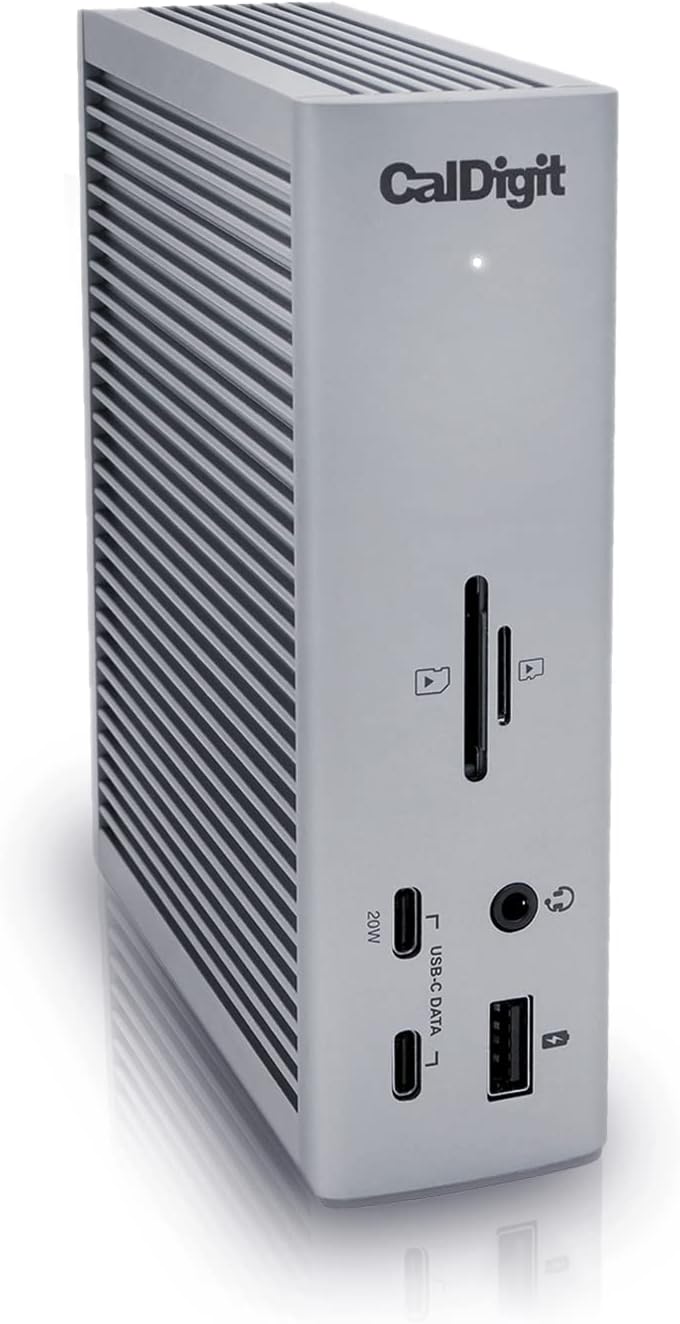

Overview of the CalDigit TS4 Thunderbolt 4 Dock
The CalDigit TS4 is to docks what a Swiss Army knife is to pocket tools. It boasts a robust 18 ports, which is enough to make even the most hardcore tech enthusiast stop and stare. This marvel of engineering might just be the secret weapon I’ve been looking for to tackle the tangled mess on my desk.
| Feature | Details |
|---|---|
| Total Ports | 18 |
| USB Ports | 8 (10Gb/s performance) |
| Thunderbolt 4 Ports | 3 (40Gb/s speed) |
| DisplayPort | 1.4 |
| Audio Ports | 3 |
| Ethernet | 2.5 Gigabit Ethernet (backward-compatible with 1GbE) |
| Charging | 98W Power Delivery |
| Display Compatibility | Single 8K or dual 6K 60Hz for specific systems |
| OS Compatibility | macOS, Windows, Chrome OS |
| Device Compatibility | Thunderbolt 4, Thunderbolt 3, USB4, USB-C devices |
Extreme Connectivity
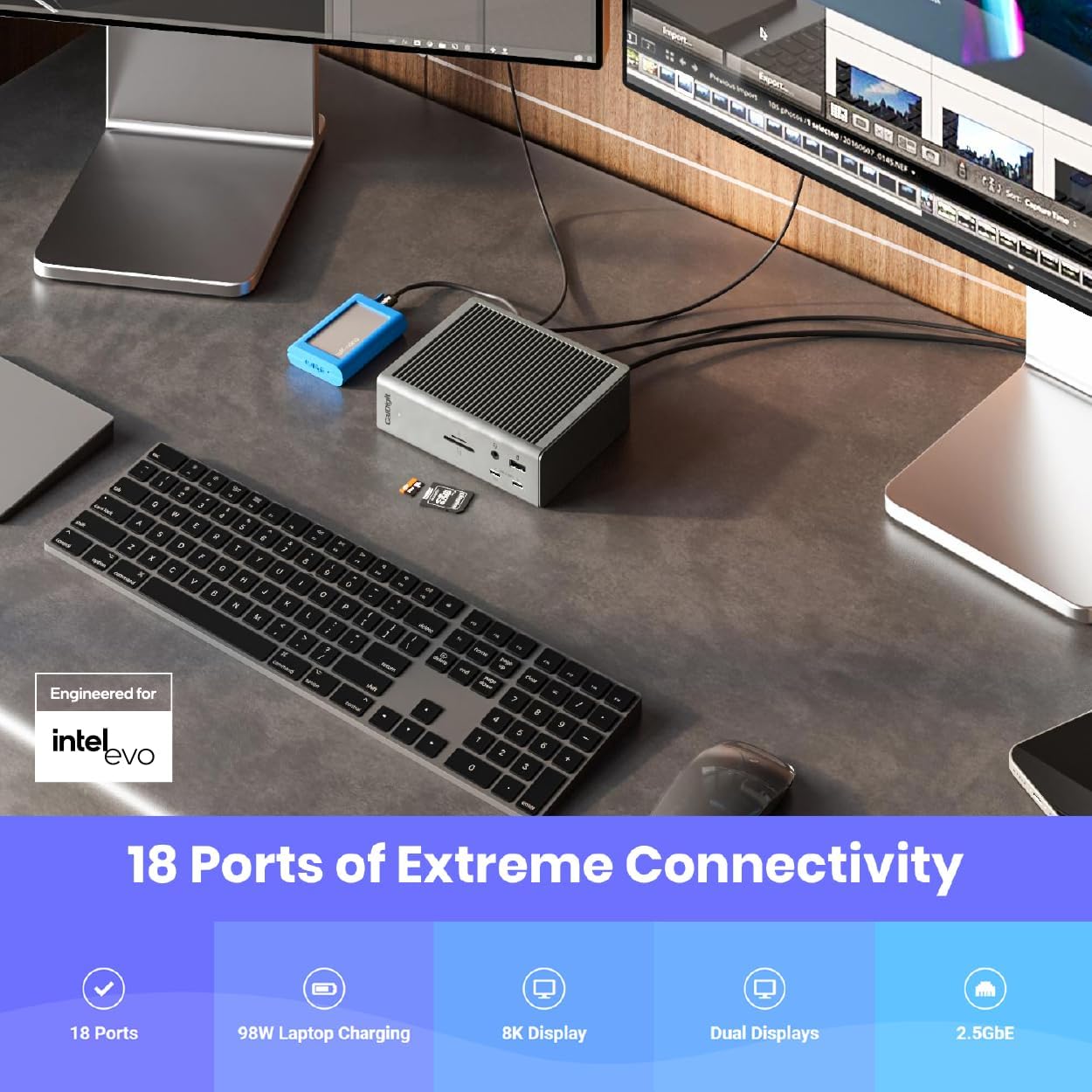
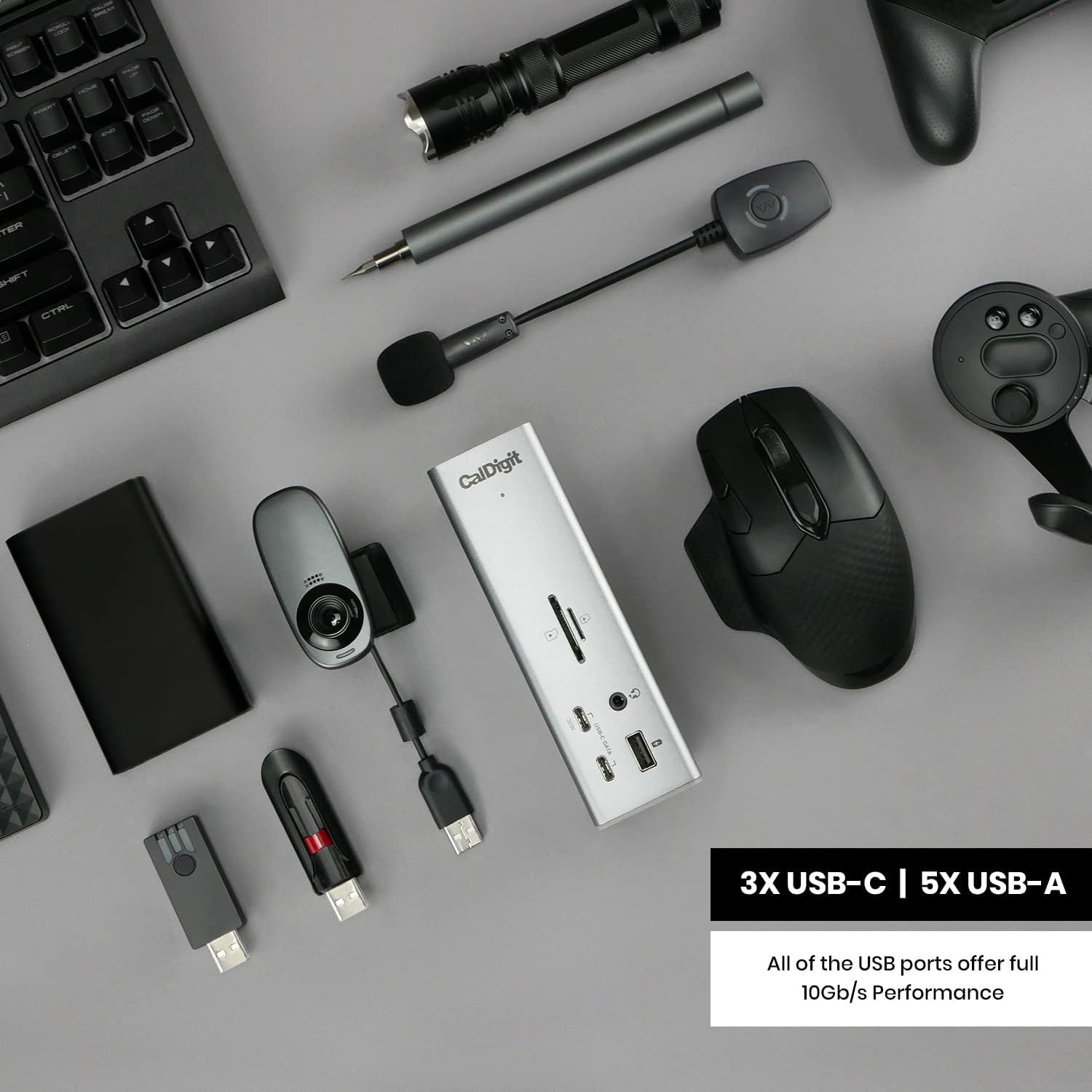
Eighteen ports sound like an exaggeration, don’t they? It’s almost like CalDigit peeked into my mind during one of those frenzied bouts where I’m juggling multiple devices, all demanding attention and sockets at once. This dock includes a mix of ports: eight USB ports capable of 10Gb/s performance, three Thunderbolt 4 ports at an impressive 40Gb/s speed, and more. With each connection, I envision a little voice whispering sweet promises of seamless workflows and clutter-free spaces.
Charging Power
The TS4 isn’t just about multiple connections. It’s like a gentle giant armed with a hefty 98W power delivery. This is crucial for serious multitaskers like me who often find themselves tethered to the wall as if their laptops were lifelines. The dock has the muscle to charge larger-screen laptops, ensuring they’re fed and happy while you work away. Simultaneously charging a laptop and connecting 18 devices feels like meeting a benevolent octopus from the future, offering a tentacle to each of my electronic companions.

CalDigit TS4, 18-in-1 Thunderbolt 4 Docking Station, 98W Charging, 3* TBT4 (40Gb/s), 3* USB-C + 5* USB-A (10Gb/s), 2.5GbE LAN, 1*8K@30Hz or 2*6K@60Hz Displays, Mac/Windows/Chrome, 0.8m Certified Cable
Display Capabilities
Single 8K or Dual 6K Displays
Deciding between a clear, vibrant display and having multiple screens is like choosing between two favorite ice cream flavors. Fortunately, the TS4 caters to both Windows and macOS aficionados. Windows users can bask in a single display up to a staggering 8K resolution, or opt for dual 4K monitors. Mac users can connect a single display at 6K 60Hz, or, if you’re lucky enough to own an M1 Pro or M1 Max, dual displays at the same resolution.
Handling Multiple Displays
For most of us who, through habit or necessity, have developed a second-nature comfort with two screens, the TS4 doesn’t disappoint. It brings whatever graphics dreamscape you have to life while maintaining compatibility across various devices. This way, whether I’m running a dual monitor setup on my Intel-based Mac or squinting at security footage on an original M1 Mac, the TS4 keeps things running with grace and efficiency.
Networking & Compatibility
Faster Ethernet
Life’s too short for slow internet, isn’t it? Especially when downloading hefty files or indulging in a bit of gaming. The TS4’s 2.5GbE port is a speed demon, 2.5 times faster than the standard 1GbE, making it perfect for NRA-grade performance. It is compatible with a range of devices, so whether my setup shifts like the tide, from Thunderbolt host connections to 2.5GbE gadgets, this dock has me covered.
Universal Compatibility
The TS4 dock is designed with an open-door policy to technology. Its universal compatibility feels like it’s giving my device collection a big, welcoming hug. Supporting Thunderbolt 4, Thunderbolt 3, USB4, and USB-C computers, it’s right at home with Apple’s M2 and M1 range, various Windows PCs, as well as Chrome OS devices. Plus, its budding friendship with the new USB-C iPhone 15, 15 Pro, and a roster of tablets, makes it a handy companion to just about anything I could throw at it.
Setting Up and Using the CalDigit TS4
Unboxing the Experience
Unpacking technology often feels like a special event for me, and the CalDigit TS4 doesn’t disappoint. It’s well-packaged, hinting at the beautifully organized world I’m about to step into. The solid build exudes confidence, almost daring me to put every one of those 18 ports to the test. CalDigit thoughtfully includes a Thunderbolt 4 cable, a power supply, and, of course, the dock itself, which is the veritable belle of the ball.
Plug-and-Play Simplicity
Have you ever had a dream where everything just worked? That’s how setting up the TS4 feels. My devices shuffle into place like a well-rehearsed performance. Plugging each cord and cable into the appropriate port triggers a delightful series of lights and confirmations from every screen and device, affirming their newfound interconnected harmony.
Firmware and Software Considerations
With any powerful piece of tech, keeping the firmware up to date is akin to nurturing a bonsai tree – meticulous yet rewarding. CalDigit makes available a firmware update, crucial for keeping everything running smoothly. The process is refreshingly straightforward, supported by their go-to download link, and a few moments later, my dock feels even more empowered, like it had just downed an espresso.
Everyday Use and Performance
Multi-tasking Maestro
In practice, the TS4 is like having a personal assistant with the prowess of a small orchestra. With devices all harmoniously plugged in, I glide between tasks with a rhythm only disrupted when I forget, momentarily, I’m not entirely self-sufficient. I can print, charge a phone, transfer files, all while my laptop hums contentedly, unencumbered by wires splayed like stray spaghetti.
Audio and Visual Output
Sifting through the TS4’s audiovisual capabilities, plugging in a pair of headphones here, a microphone there – it’s all about giving what used to be a noisy cacophony the clarity and precision of a symphony. The balanced sound experience breathes life into my music, meetings, and side projects with an audio quality that’s rich and vibrant, with no signs of lagging behind.
Something for Everyone
Whether you’re a creative type spinning at the edge of Adobe Suite like a discus-thrower of digital art, or plodding through endless Excel sheets like a modern-day marathon, the TS4 is there, silently flexing its muscles to accommodate your needs. Each port is a lifesaver in different scenarios, catering comprehensively to everyone from professionals to hobbyists, and everyone in between.
Final Thoughts
If I were to anthropomorphize the TS4, it would likely be the kind of friend who always knows exactly what you need even before you voice it. It offers a seamless blend of connectivity, charging prowess, and display capabilities wrapped in a package that’s deceptively compact. Each feature thoughtfully considers the needs of modern technology users, effortlessly transforming any workspace into a hub of optimized efficiency.
In this fast-paced, interconnected world, the real MVP isn’t necessarily the device that hits every technical milestone, but the one that takes the frustration out of working with those devices in tandem. The CalDigit TS4 Thunderbolt 4 Dock doesn’t just deliver 18 ports; it delivers a solution to a more integrated, efficient, and outrageously functional workspace, making it the multitasker’s dream. And that, I believe, makes every tangled cable and exhausted power socket on my desk breathe a sigh of relief.
Disclosure: As an Amazon Associate, I earn from qualifying purchases.
Docking Station Intelligence
The standards are confusing by design. These three panels decode what manufacturers won’t explain clearly. Applicable to every docking station.
The USB-C Confusion Matrix
The USB-C connector is the single greatest source of buyer confusion in docking stations. The physical plug looks identical whether it carries USB 2.0 at 480 Mbps or Thunderbolt 5 at 120 Gbps — a 250x difference in capability hidden behind the same shape. Manufacturers exploit this by labeling everything "USB-C compatible" without specifying which protocol runs through it. Two docks can look identical on the outside and behave completely differently once you plug them in.
The hierarchy matters because it determines everything: how many monitors your dock can drive, how fast files transfer, whether your laptop charges while docked, and whether you need third-party drivers. Here is the real capability ladder, from slowest to fastest:
The practical takeaway: if your laptop has Thunderbolt 4, buy a Thunderbolt dock. If it only has generic USB-C, verify whether it supports DisplayPort Alt Mode before buying anything with multi-monitor claims. Our buying guide walks through verification steps for every major laptop brand.
Power Delivery: What the Watts Mean
Power Delivery (PD) determines whether your docking station can charge your laptop while you work, or whether you need a separate charger cluttering your desk. The math is simple but rarely explained: your laptop draws a specific wattage under load, and the dock must match or exceed it. If the dock delivers less than your laptop needs, the battery slowly drains even while plugged in — defeating the purpose of a docking station entirely.
Most ultrabooks need 45–65W. Standard business laptops need 65–100W. Gaming and workstation laptops can demand 100–140W or more. The dock’s advertised PD wattage is the maximum it can deliver to your laptop — but this drops if you charge other devices (phones, tablets) through the dock simultaneously. Always leave a 15–20W margin above your laptop’s requirement.
Check your laptop’s original charger wattage — that’s your baseline. Our FAQ covers how to find this for every major brand.
Native Display vs DisplayLink: The Hidden Factor
This is the decision most buyers don’t know they’re making. When a docking station outputs video to your monitors, it uses one of two fundamentally different methods: native (the dock passes your laptop’s GPU signal directly to the monitor) or DisplayLink (the dock compresses video over USB and a software driver renders it). The difference is invisible in marketing materials but profoundly affects your daily experience.
Native output through DisplayPort Alt Mode or Thunderbolt uses your laptop’s actual graphics hardware. There is zero added latency, full DRM support for streaming services, no CPU overhead, and no driver to install. DisplayLink, by contrast, adds 5–15ms of latency (noticeable in video calls and cursor movement), blocks DRM content on connected monitors (Netflix, Disney+ show black screens), consumes 3–8% of your CPU constantly, and requires a driver that Apple’s macOS security updates occasionally break.
DisplayLink exists for one reason: Apple Silicon base chips (M1, M2, M3) can only drive one external display natively. If you need two or more monitors on a base MacBook Air or 13” MacBook Pro, DisplayLink is your only option. For everyone else — Windows users, Mac Pro/Max chip users, Intel/AMD laptops — native is always the better choice.
Native (Alt Mode / Thunderbolt)
DisplayLink (USB compression)
The bottom line: if your laptop supports native multi-display output, always choose a native dock. DisplayLink is a workaround, not an upgrade. See our glossary for detailed definitions.
COMMAND CENTERCOMMAND CENTER
Six tools that decode the confusion manufacturers create. Port protocols, power budgets, display configurations, compatibility, desk planning, and future-proofing. Full buying guide →
Port Protocol DecoderWhat does your connection type actually support? Glossary
Power Delivery CalculatorCan this dock keep your laptop charged?
Display Configuration PlannerCan your dock push enough pixels?
Laptop-to-Dock CompatibilityWill this dock work with YOUR laptop?
Desk Setup ArchitectWhat ports do you actually need?
Select everything you need to connect: