
How To Extend Android Screen To Monitor USB-C?
Unlock the full potential of your Android by extending its screen to a USB-C monitor. Boost productivity & enjoy media on a bigger screen with our easy how-to guide.
How we evaluate desktop screen setups
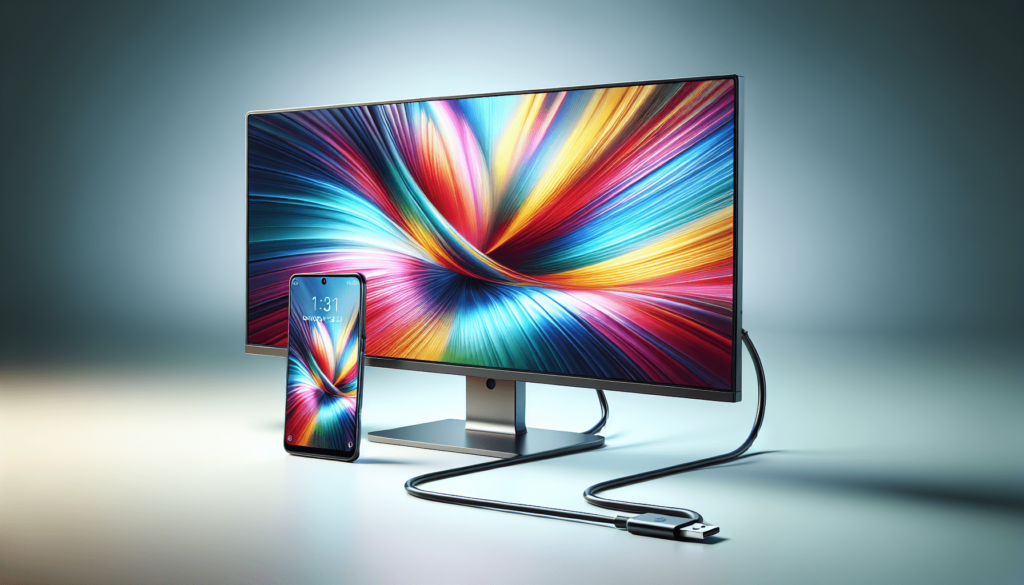
Have you ever wondered how to get more out of your Android device by extending its screen to a larger USB-C monitor? If you’re like me, you’ve been searching for ways to boost productivity or simply enjoy your media content on a bigger screen. Let’s embark on this journey together and find out how to make this seamless connection.
Understanding the Basics
Before we get into the nuts and bolts, let’s cover the basics. By knowing what you need and what’s possible, you can save a lot of time and effort.
What Does It Mean to Extend Your Screen?
When we talk about extending your Android screen to a monitor through USB-C, we’re essentially referring to connecting any compatible Android device to an external display. This setup allows you to use the external monitor as a second screen, which can significantly expand your workspace or entertainment setup.
Why Would You Want to Do This?
There are several reasons why connecting your Android device to a larger screen could be beneficial:
- Increased Productivity: A larger display can help you multitask more efficiently. Imagine editing a document on one screen while referencing notes on another.
- Enhanced Media Experience: Watching movies, videos, or gaming on a larger screen can be far more satisfying.
- Presentations: For business or educational purposes, projecting your screen can make presentations smoother.
What You’ll Need
Here’s the kicker: not all devices are created equal, and some prerequisites need to be in place to extend your Android screen to a monitor via USB-C.
Hardware Requirements
Your Android device must support USB-C video output. Not every phone or tablet has this capability, so it’s crucial to check beforehand.
| Component | Requirement |
|---|---|
| Android Device | USB-C port, supports video output |
| USB-C Cable | High-speed, compatible with video transfer |
| Monitor | USB-C port or HDMI/VGA/DVI port |
| Adapter (if needed) | USB-C to HDMI/VGA/DVI, if monitor lacks USB-C |
Software Requirements
In many cases, your Android device should have an OS version that supports video output through USB-C. Usually, Android versions 8.0 and upwards have this functionality.
Steps to Extend Your Screen
Now that we’ve covered what you need, let’s talk about the how-to. I’m going to break it down step-by-step so you can follow along easily.
Step 1: Check Compatibility
First, make sure your Android device supports this feature. You can usually find this information in the device’s technical specifications.
Step 2: Gather Your Gear
Assuming your device is compatible, gather the necessary components (listed earlier) – Android device, USB-C cable, monitor, and any needed adapters.
Step 3: Connect Your Devices
-
Direct USB-C Connection:
- Plug the USB-C cable into your Android device.
- Plug the other end into the USB-C port on your monitor.
- Your Android screen should automatically appear on the external monitor.
-
Using an Adapter:
- Connect the USB-C cable to your Android device and adapter.
- Connect the adapter to the HDMI/VGA/DVI cable.
- Plug the HDMI/VGA/DVI cable into the respective port on the monitor.
- Switch the monitor’s source to the correct input, and your Android screen should appear.
Step 4: Configure Display Settings
Once connected, you may want to configure the display settings for optimal performance.
- Open Settings: Go to your Android device’s settings.
- Display Options: Locate the ‘Display’ or ‘Connected devices’ section.
- Adjust Settings: Configure screen resolution, orientation, and other display settings as needed.
Troubleshooting Common Issues
Even with the best preparations, sometimes things don’t work as planned. Here are some common problems and how to address them.
No Display on the Monitor
Sometimes, your Android screen might not appear on the monitor. Here’s what you can do:
- Check Connections: Ensure all cables are securely connected.
- Check Compatibility: Verify that both your Android device and monitor support video output.
- Restart Devices: Sometimes a simple reboot can solve connection issues.
Poor Display Quality
If the display quality on the monitor is subpar:
- Adjust Resolution: Make sure the resolution setting on your Android device matches your monitor’s capabilities.
- Use High-quality Cables: Low-quality cables can degrade video signals. Using a high-speed USB-C cable can make a big difference.
Monitor Not Detecting Android Device
If the monitor isn’t recognizing the Android device:
- Switch Cables/Adapters: Try using different cables or adapters. Sometimes the problem lies in faulty connections.
- Update Software: Ensure your Android OS is up to date, as newer updates can fix compatibility issues.
Enhancing Your Experience
After getting your Android screen extended to the monitor, there are several ways to enhance the experience even further.
External Keyboard and Mouse
Connecting an external keyboard and mouse can make the setup even more functional, especially for productivity tasks.
Apps and Software
Some apps are specifically designed to take advantage of larger screens. Examples include:
- Productivity Apps: Office suites like Microsoft Office or Google Workspace.
- Drawing Apps: Perfect for artists using apps like Autodesk SketchBook.
- Entertainment Apps: Video players like VLC can provide a better viewing experience.
Using Samsung DeX
If you own a recent Samsung device, you’re in luck; it likely supports Samsung DeX, a feature that turns your phone into a desktop-like experience when connected to a monitor.
Third-Party Adapters and Hubs
Investing in a multi-port adapter or USB-C hub can add multiple functionalities. These hubs sometimes come with additional USB ports, card readers, and even Ethernet connections, making your setup even more versatile.
| Feature | Benefits |
|---|---|
| Multi-Display Ports | Connect additional monitors easily |
| USB Ports | Attach external storage, peripherals |
| Card Readers | Transfer files from SD cards directly |
| Ethernet Port | Ensure a stable, wired internet connection |
Conclusion
Connecting your Android device to a larger monitor via USB-C is a fantastic way to boost productivity, improve your entertainment experience, or streamline presentations. Whether you’re working on a complex project or streaming your favorite shows, this setup can be both functional and enjoyable.
Tread carefully into the waters of compatibility and keep the right tools at hand. Soon, you’ll be navigating your new, expanded screen like a pro. So why wait? Elevate your Android experience today!
Boniface approaches a desktop multi-screen setup the way a technician approaches a bench — mapping GPU display-pipeline ceilings, connection-standard limits, and the ergonomic trade-offs of a layout before any hardware earns a place in a guide. When the honest answer is a different configuration, the review says so.
Desktop Screen Extender Intelligence
Category-level tools and technical context. Connection methods, ergonomics, and GPU constraints decoded.
Connection Methods Compared
Whether you’re connecting a single external monitor or building a triple-screen workstation, the method you choose determines everything — cost, quality, complexity, and long-term reliability. Most people default to whatever cable came in the box without understanding the trade-offs.
A docking station is the simplest path if your laptop has Thunderbolt or USB-C with DisplayPort Alt Mode, but also the most expensive ($80–$300). You plug in one cable and the dock handles everything: video output to multiple monitors, USB peripherals, Ethernet, and power delivery back to your laptop. The trade-off is cost and desk space — docks are permanent fixtures.
USB display adapters cost far less ($25–$60 each) but introduce DisplayLink driver dependency. This means added CPU overhead (3–8%), potential DRM issues on connected monitors (Netflix and Disney+ may show black screens), and occasional macOS compatibility breakdowns after system updates. If you’re on Windows and don’t need DRM content on external screens, this is the budget path.
The HDMI splitter ($10–$20) can only duplicate your screen, not extend it. If you need independent content on each monitor — the entire point of a productivity setup — a splitter is useless. Only good for presentations or mirroring.
An external GPU ($200–$600+) is the maximum-performance option with its own dedicated graphics processing. Trade-off: significant cost, Thunderbolt 3/4 required, extra desk space for the enclosure, and driver complexity. Best for gaming or creative workloads. Our buying guide breaks down specific products for each method.
| Method | Cost | Extends? | Drivers? | Best For |
|---|---|---|---|---|
| Dock | $80–$300 | Yes | Usually no | Permanent desk |
| USB Adapter | $25–$60 | Yes | Often | Budget |
| Splitter | $10–$20 | No | No | Presentations |
| eGPU | $200–$600+ | Yes | Yes | Gaming/creative |
GPU Output Capability Checker01+
Multi-Monitor Connection Planner02+
Ergonomic Multi-Monitor Positioning
Adding monitors without considering ergonomics is how people end up with neck pain, back strain, and eye fatigue within weeks. Research consistently shows dual-monitor use can increase productivity by up to 43%, but subsequent occupational health research from OSHA and Herman Miller confirmed these gains only hold when monitors are positioned correctly. Bad positioning negates the productivity benefit and adds physical cost.
The fundamental rule: the top of your primary monitor should sit at or slightly below your natural eye level when sitting upright with your back supported. If you wear bifocals or progressive lenses, position monitors slightly lower so you look through the correct zone. The screen should be arm’s length away — 18 to 28 inches — close enough to read comfortably without leaning forward, far enough that your eyes don’t strain to focus.
For two monitors where one is primary (used 80%+ of the time): center the primary directly in front of you and place the secondary to the side of your dominant eye, angled inward 15–30°. For two monitors used equally: center the seam between them directly in front of your nose, both angled inward to form a gentle arc.
For triple monitors — the cockpit arrangement — the center monitor sits directly in front at arm’s length. Side monitors angle inward at 15–30° each. Your desk needs at least 55 inches wide for 24″ monitors, or 70+ inches for 27″. If your desk is narrower, monitor arms become mandatory — they push screens back and reclaim desk depth.
The most common mistakes: monitors too close and too high. If you tilt your head back, they’re too high. If you lean forward to read, they’re too far or your text size needs adjusting. Take five minutes to get positioning right before spending hours in a bad posture. Our FAQ covers specific guidance for every desk size and monitor configuration.
Monitor Arrangement Ergonomics Advisor03+
Resolution & Refresh Rate Check04+
GPU Bandwidth & Display Limits
Here is the uncomfortable truth that most multi-monitor guides skip: some laptops physically cannot drive three independent monitors, regardless of how many adapters or docks you buy. The limitation is in the GPU hardware, not the cables.
Every display output consumes GPU bandwidth. A single 4K monitor at 60Hz requires approximately 12 Gbps of bandwidth. A 1080p monitor at 60Hz needs about 3 Gbps. Your laptop’s GPU has a finite number of display pipelines — hardware paths that output independent video signals. Intel’s integrated UHD 620/630 graphics typically support 3 simultaneous displays. Intel Iris Xe supports up to 4. AMD’s integrated Radeon varies by generation but usually supports 3. NVIDIA discrete GPUs can handle 4+, but the laptop manufacturer may not wire all outputs to external ports.
The critical case is Apple Silicon. Base M1, M2, and M3 chips natively support only one external display. Not two, not three — one. The Pro variants support two. The Max supports three or four depending on configuration. This is a hardware limitation no software update will fix. If you own a base MacBook Air and want multiple external monitors, DisplayLink is your only path — and it comes with added latency, DRM restrictions, and CPU overhead.
Always verify your GPU’s actual display output limit before purchasing any hardware. The GPU Output Capability Checker tool above does exactly this. For detailed DisplayLink coverage, see our glossary.
Cable & Adapter Shopping List05+
Display Troubleshooter06+
Docking stations
Simplest multi-monitor method. Dozens reviewed across Thunderbolt and USB-C.
Browse docking stationsPortable monitors
Lightweight USB-C displays. No adapter chains, travel-ready.
Browse portable monitors