
Hiearcool USB C Hub Review
Explore the Hiearcool USB C Hub's quirks and charms in this witty review. Discover how this pocket-sized powerhouse can transform your tech life.
Could your laptop’s connectivity use a boost? I’m here to tell you all about the Hiearcool USB C Hub, a veritable Swiss Army knife for your tech needs. USB-C ports have swept the tech world by storm, and suddenly all those beloved ports have vanished from the scene, leaving many of us searching for answers in a jungle of adapters and dongles. Fear not—I’ve taken this contraption for a spin, and here’s my friendly and in-depth review.
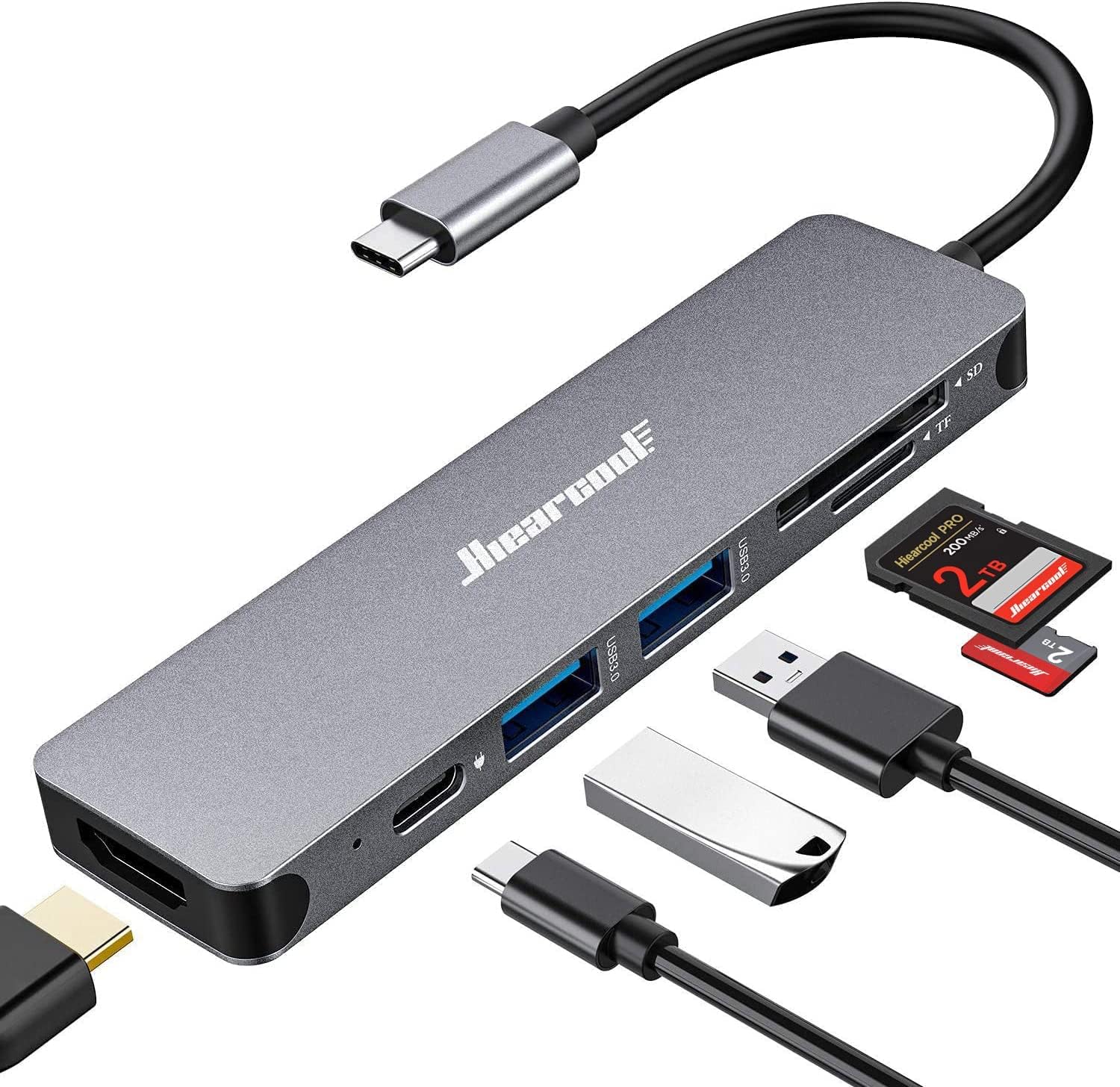

What is Hiearcool USB C Hub?
The Hiearcool USB C Hub is not merely a hub; it’s the hub. With its streamlined design and impressive multi-functionality, it simplifies the digital juggling act that modern life demands. It’s like that friend who shows up unexpectedly with a homemade casserole—appearing just in time to save the day.
Design and Build
First off, let’s talk about the physical appeal. Upon unboxing, the hub sports a sleek, aluminum alloy casing that boasts durability without the bulk. Weighing a mere 2.4 ounces, this gadget squeezes an impressive array of features into its svelte figure. It fits almost anywhere—a pocket, a small bag, or even underneath a pile of receipts at the bottom of a drawer. Its minimalist design doesn’t just blend into the MacBook line-up; it actively complements it.
Features Overview
With the following specifications, it boldly promises more than just added connectivity:
- USB Ports: Two USB 3.0 ports
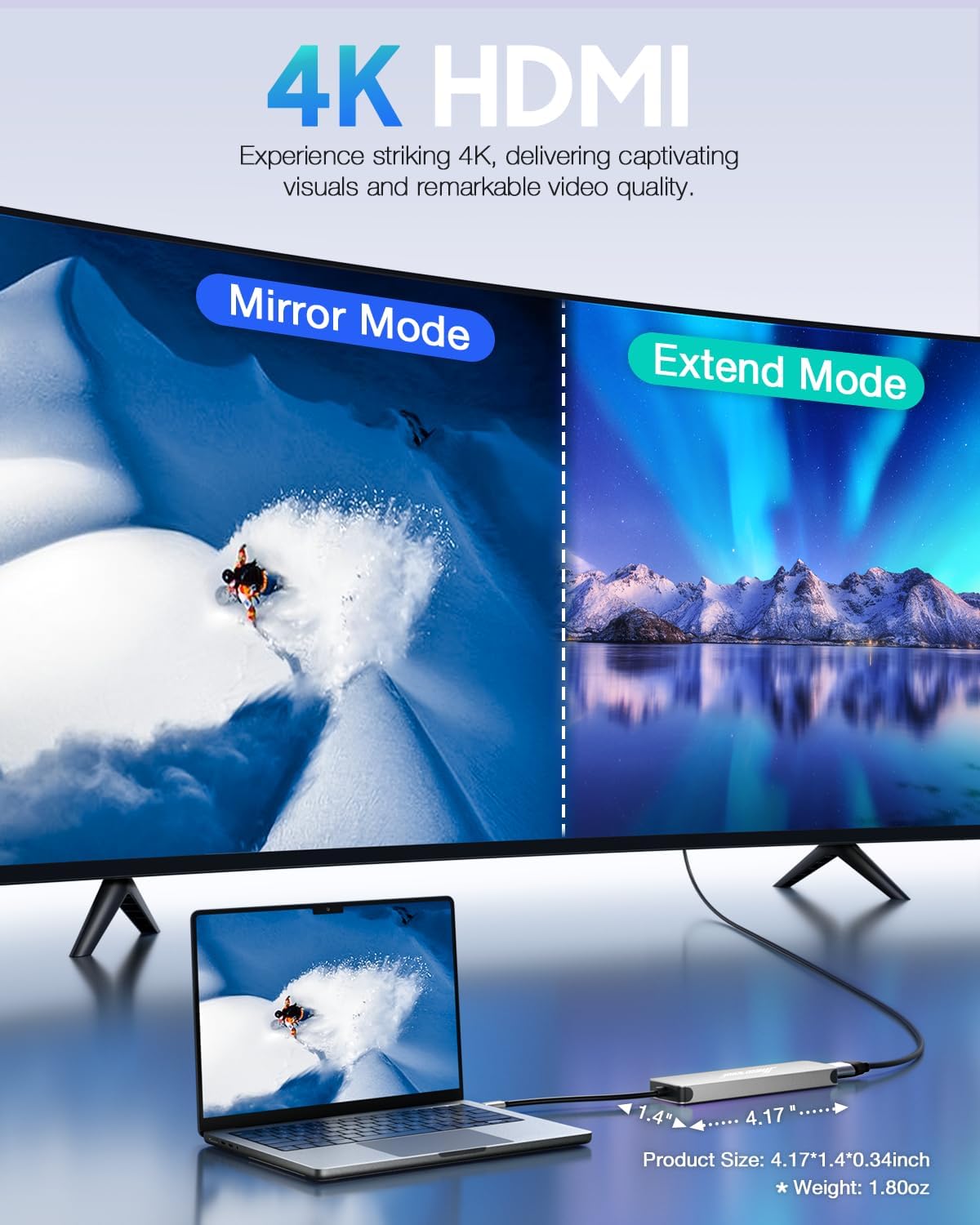
- HDMI: 4K 30Hz HDMI
- Card Readers: SD/TF Card Reader
- Power Delivery: 100W USB C Power Delivery
- Compatibility: MacBook Pro/Air and other Type C devices
This is a lot in a small package, and it’s doubtful that anyone would need to ask Santa for extra features.
HDMI Output
At the heart of this device is the HDMI output, offering 4K 3840 x 2160 resolution at 30Hz. Whether you’re streaming your favorite show, or presenting slides filled with pie charts, it’s like your laptop’s pixels are on steroids. The sheer quality of the picture makes you feel like you’re floating inside the screen—watching your past, present, and future unfold in high definition.
USB 3.0 Ports
Fast like a nature documentary fox, these two USB 3.0 ports operate at a transfer speed of 5Gb/s, meaning you can backup files while sipping a coffee without watching that dreaded loading bar inch forward ever so slowly. It feeds power comfortably too, with 5V 0.9A charging capabilities—enough to keep smaller peripherals humming along.
SD/TF Card Reader
Taking photography more seriously during your recent staycation? The SD/TF Card Reader can handle cards up to 2TB—perfect for managing those vast libraries of photos from when you were engrossed in capturing perfect sunset poses or that new pancake recipe that “definitely doesn’t taste like flour.”

Hiearcool USB C Hub for MacBook – 7-in-1 USBC Adapter with 4K HDMI, 100W PD, USB 3.0 5Gbps Ports, SD/TF Card Reader – USB-C Dongle for Office, Meetings, Travel & Home Setup-Space Grey
Performance
The appeal of plug-and-play cannot be overstated. There’s no soul-sucking software download required, just a simple plug-in and you’re off to the races. Efficiency is at the core of this hub’s design—it refuses to lag, ensuring life’s little tasks get done with speed. All this, capped off by seamless integration with Apple, Dell, HP, Lenovo, and Type-C phones and pads, opens up a universe of options.
Pass-Through Charging
This feature supports up to 100W USB C pass-through charging and is a godsend for those prone to battery paranoia every time their device drops below 80%. Your device does its best not to be demanding, while you experience the comforting knowledge that you won’t be stranded mid-Zoom call without power.
Compatibility
You might think that compatibility would be a complex dance when integrating cross-branded technologies. However, this hub pirouettes gracefully, working with almost any modern machine you can think of. It’s the party-guest who gets along with everyone, from the cool Apples to the underdog Lenovos.
Ease of Use
Thanks to this hub, I felt like I was navigating a self-driving car down a straight highway with no traffic in sight. Its plug-and-play nature and absence of any pesky drivers make for an incredibly painless experience. Switching between connectivity options is smooth, presenting absolutely no hurdles—save for the existential dread of having so much power resting in the palm of your hand.
Pros and Cons
Let’s break down the virtues and vices of this device in a digestible format:
| Pros | Cons |
|---|---|
| Compact and lightweight | Emits heat during prolonged use |
| No software installation required | 4K at 30Hz only, no 60Hz support |
| High-speed data transfer | May not work with certain outdated devices |
| 100W power delivery | Some may find build slightly fragile under rough use |
| Wide device compatibility | Lacks Ethernet port |
| Excellent build quality | Not suited for devices solely using older USB standards |
The Verdict
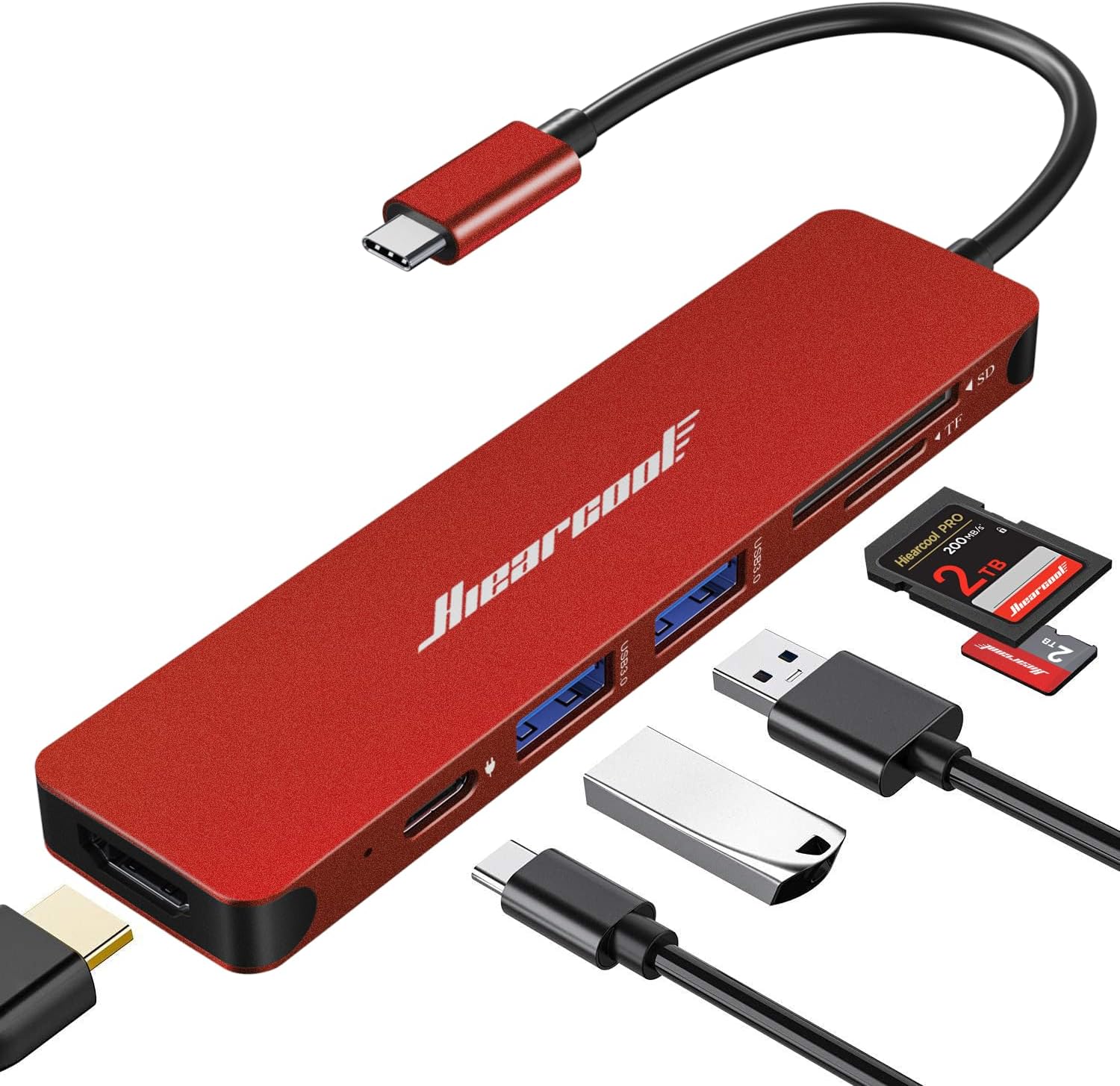
After intimate acquaintance with the Hiearcool USB C Hub, it’s evident that for its price range and feature set, it over-delivers in several categories. It’s an indispensable tool for the modern digital dynamo, the pepper to your connectivity salad. Despite minor cons like the lack of a 60Hz refresh rate or an Ethernet port, these do little to mar its position as a leading choice for those seeking practical, mobile, and versatile connectivity solutions.
Would I suggest adding this to your tech arsenal? Absolutely. Does it singularly solve every connectivity hindrance? No, but it comes impressively close.
In conclusion, the Hiearcool USB C Hub is that friend who can somehow simultaneously host a dinner party, juggle, and recite Shakespeare—all with a casual demeanor that makes it look easy. Its design, features, and reliability make it a companion worth investing in, especially as we fumble our way through a world with a seemingly endless stream of new devices.
Disclosure: As an Amazon Associate, I earn from qualifying purchases.
Docking Station Intelligence
The standards are confusing by design. These three panels decode what manufacturers won’t explain clearly. Applicable to every docking station.
The USB-C Confusion Matrix
The USB-C connector is the single greatest source of buyer confusion in docking stations. The physical plug looks identical whether it carries USB 2.0 at 480 Mbps or Thunderbolt 5 at 120 Gbps — a 250x difference in capability hidden behind the same shape. Manufacturers exploit this by labeling everything "USB-C compatible" without specifying which protocol runs through it. Two docks can look identical on the outside and behave completely differently once you plug them in.
The hierarchy matters because it determines everything: how many monitors your dock can drive, how fast files transfer, whether your laptop charges while docked, and whether you need third-party drivers. Here is the real capability ladder, from slowest to fastest:
The practical takeaway: if your laptop has Thunderbolt 4, buy a Thunderbolt dock. If it only has generic USB-C, verify whether it supports DisplayPort Alt Mode before buying anything with multi-monitor claims. Our buying guide walks through verification steps for every major laptop brand.
Power Delivery: What the Watts Mean
Power Delivery (PD) determines whether your docking station can charge your laptop while you work, or whether you need a separate charger cluttering your desk. The math is simple but rarely explained: your laptop draws a specific wattage under load, and the dock must match or exceed it. If the dock delivers less than your laptop needs, the battery slowly drains even while plugged in — defeating the purpose of a docking station entirely.
Most ultrabooks need 45–65W. Standard business laptops need 65–100W. Gaming and workstation laptops can demand 100–140W or more. The dock’s advertised PD wattage is the maximum it can deliver to your laptop — but this drops if you charge other devices (phones, tablets) through the dock simultaneously. Always leave a 15–20W margin above your laptop’s requirement.
Check your laptop’s original charger wattage — that’s your baseline. Our FAQ covers how to find this for every major brand.
Native Display vs DisplayLink: The Hidden Factor
This is the decision most buyers don’t know they’re making. When a docking station outputs video to your monitors, it uses one of two fundamentally different methods: native (the dock passes your laptop’s GPU signal directly to the monitor) or DisplayLink (the dock compresses video over USB and a software driver renders it). The difference is invisible in marketing materials but profoundly affects your daily experience.
Native output through DisplayPort Alt Mode or Thunderbolt uses your laptop’s actual graphics hardware. There is zero added latency, full DRM support for streaming services, no CPU overhead, and no driver to install. DisplayLink, by contrast, adds 5–15ms of latency (noticeable in video calls and cursor movement), blocks DRM content on connected monitors (Netflix, Disney+ show black screens), consumes 3–8% of your CPU constantly, and requires a driver that Apple’s macOS security updates occasionally break.
DisplayLink exists for one reason: Apple Silicon base chips (M1, M2, M3) can only drive one external display natively. If you need two or more monitors on a base MacBook Air or 13” MacBook Pro, DisplayLink is your only option. For everyone else — Windows users, Mac Pro/Max chip users, Intel/AMD laptops — native is always the better choice.
Native (Alt Mode / Thunderbolt)
DisplayLink (USB compression)
The bottom line: if your laptop supports native multi-display output, always choose a native dock. DisplayLink is a workaround, not an upgrade. See our glossary for detailed definitions.
COMMAND CENTERCOMMAND CENTER
Six tools that decode the confusion manufacturers create. Port protocols, power budgets, display configurations, compatibility, desk planning, and future-proofing. Full buying guide →
Port Protocol DecoderWhat does your connection type actually support? Glossary
Power Delivery CalculatorCan this dock keep your laptop charged?
Display Configuration PlannerCan your dock push enough pixels?
Laptop-to-Dock CompatibilityWill this dock work with YOUR laptop?
Desk Setup ArchitectWhat ports do you actually need?
Select everything you need to connect: