
Anker Laptop Docking Station Review
Discover the Anker Laptop Docking Station—a sleek 8-in-1 USB-C hub that transforms cord chaos into organized bliss with dual HDMI, ethernet, and speedy power.
Have you ever found yourself elbow-deep in a mess of cables and adapters, sighing exasperatedly as you plug and unplug in a frantic quest for the right connection? I have. And in that moment of cord chaos, when it seems an impossible task to achieve a clean, efficient workspace, the Anker Laptop Docking Station, 8-in-1 USB-C Hub emerges like a sleek, modern lighthouse guiding you out of the tech doldrums.

The “More is Better” Mantra
Massive Expansion Capabilities
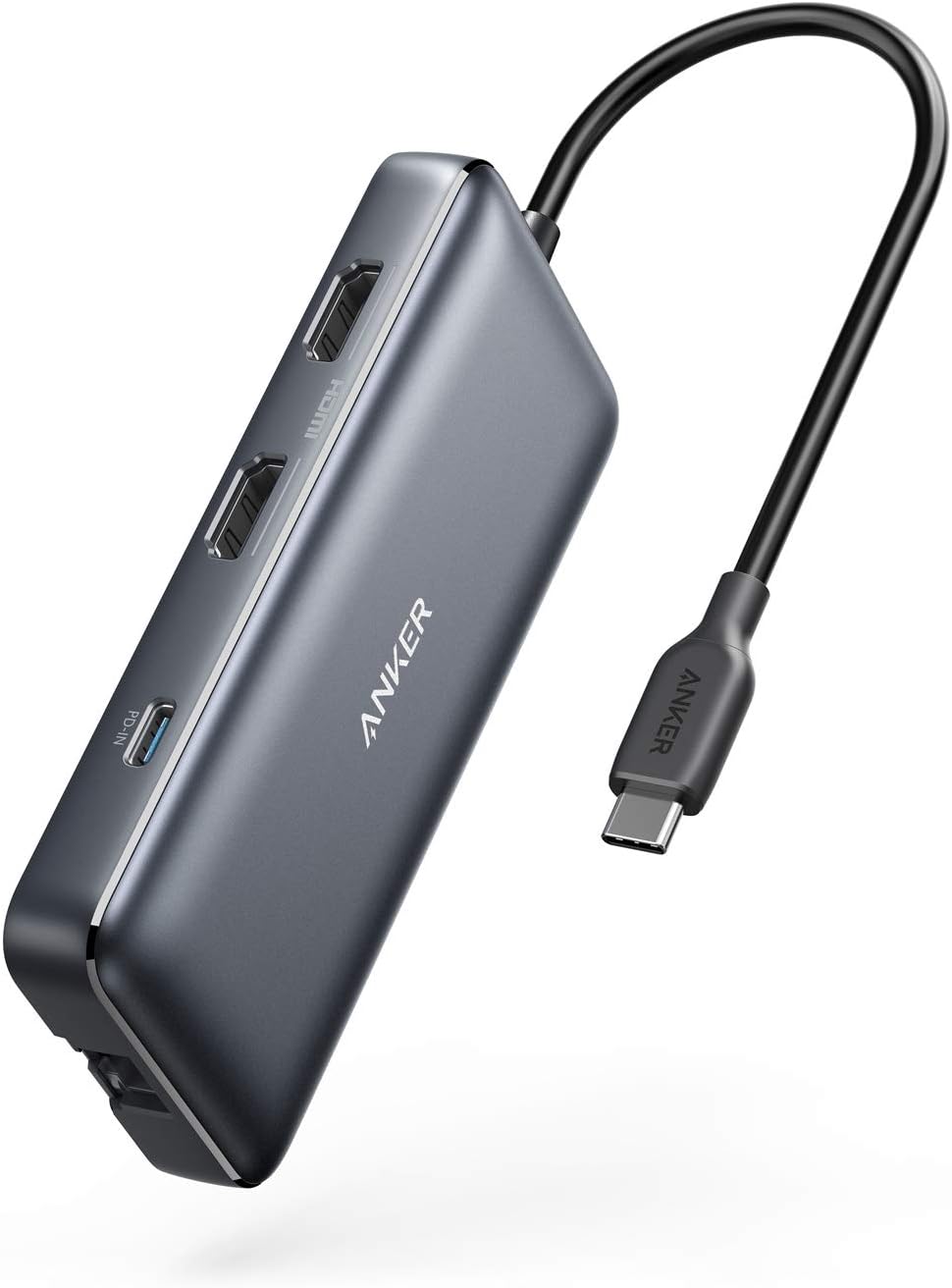
With this product, it’s all about expansion. Imagine your usual USB-C port, then multiply its utility eightfold. You’re granted a USB-C port, two USB-A data ports, two HDMI ports, an Ethernet port, and a microSD/SD card reader. It’s akin to waking up one morning and finding out your ordinary cup of coffee can now do your taxes. Suddenly, your laptop becomes a magical multi-tool, prepared for nearly any task you dare to throw its way.
| Port Type | Number Available | Functions |
|---|---|---|
| USB-C | 1 | Power Delivery |
| USB-A | 2 | Data Transfer |
| HDMI | 2 | Dual Display |
| Ethernet | 1 | Internet Connection |
| microSD/SD Card Reader | 1 | Data Transfer |
This table lays it out simply, yet each port lends you an air of invincibility. A missed opportunity to connect? Not with this hub. With these many options, you could probably power a small army of devices, or at least make it through a particularly demanding work day.
The Dual HDMI Display Dream
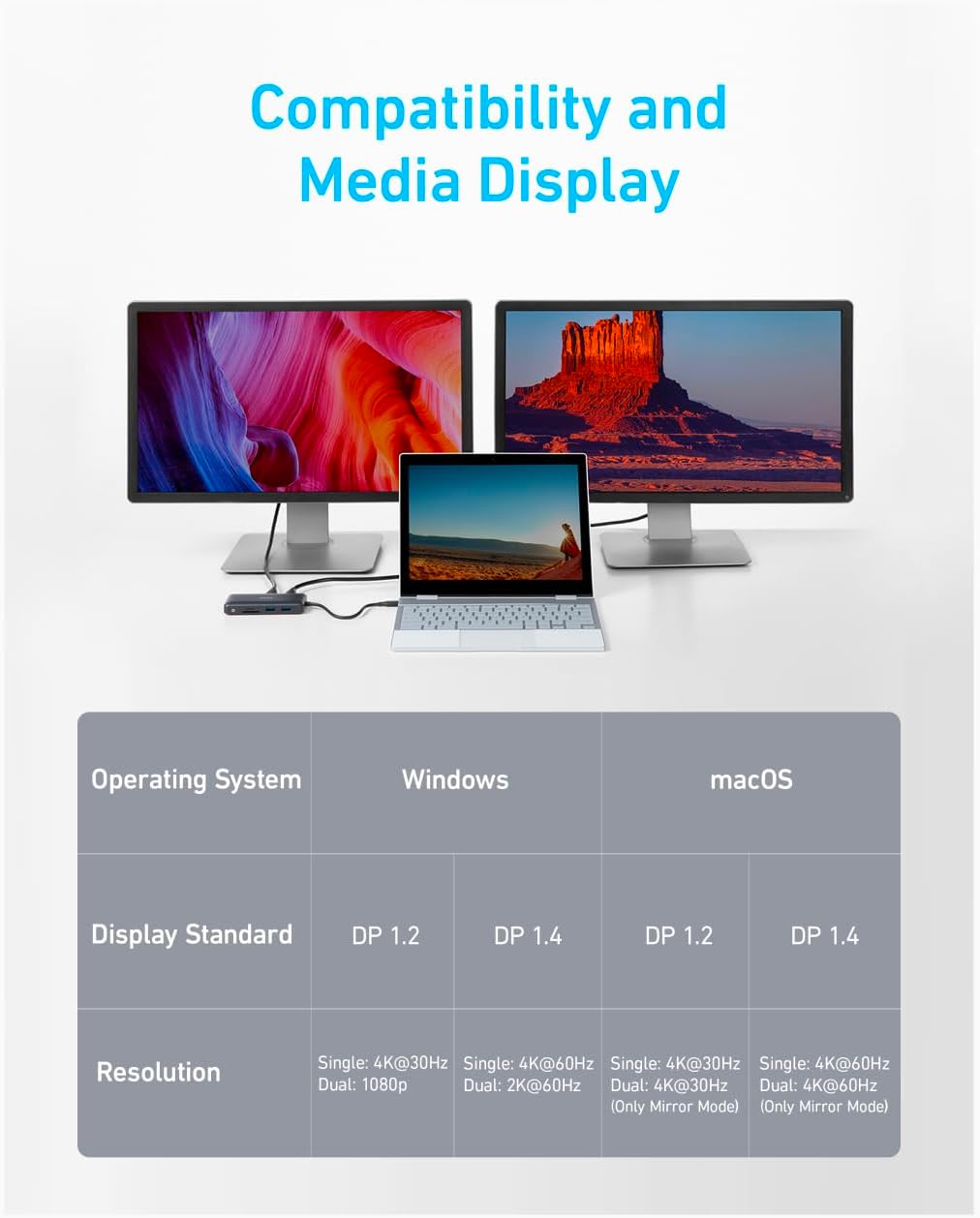
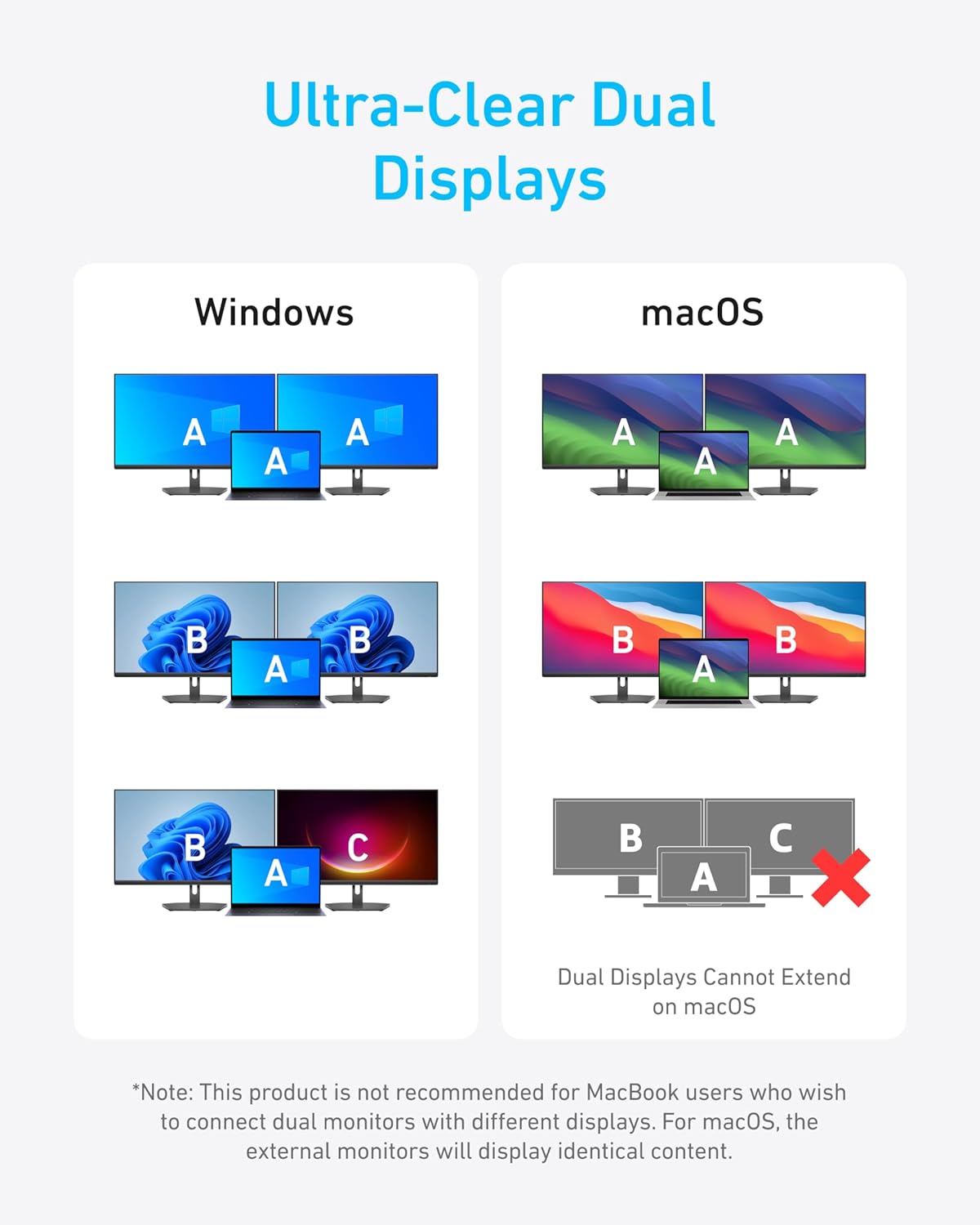
Ah, the beauty of not one but two screens! I can imagine myself, akin to a character in a sci-fi movie, sitting amidst a command center of dual displays. With the Anker hub, you can stream or mirror content to a single device in glorious 4K@60Hz quality. For my fellow Mac users, note that while you can connect two HDMI monitors and bask in 4K@30Hz delight, they’ll reflect each other like synchronized swimmers.
This dual capability transforms your workspace into a productivity powerhouse, balancing aesthetics and functionality. Finally, monitor envy can be a thing of the past.

Anker Laptop Docking Station Dual Monitor, 8-in-1 USB C Hub, 4K Dual Monitor with 2 HDMI, 1 Gbps Ethernet Hub, 85W Power Delivery, SD Card Reader, for XPS and More (Charger not Included)
Power Needs Meet Their Match
Power Delivery Compatibility
In our fast-paced world, speed matters. Be it in food service, the queue for morning coffee, or, notably, when charging our beloved gadgets. The Anker Docking Station boasts compatibility with USB-C Power Delivery, offering high-speed pass-through charging up to 85W. That brief moment where you’re tethered to a wall socket becomes just that—a brief moment.
Here’s the caveat: to harness this speedy prowess, you’ll require a 100W PD wall charger and a USB-C to C cable. It’s like needing the right tie to make a suit feel complete; with these additional pieces, you’re fully equipped for any power scenario life throws at you.
The Compatibility Conundrum
Versatile Support Across Devices
There’s compatibility, and then there’s the Anker Docking Station’s level of it. It supports USB-C, USB4, and Thunderbolt connections and works with MacBooks, Windows 10 and 11, ChromeOS, and laptops with DP Alt Mode and Power Delivery. It’s that universal translator you always wished you had, ensuring nothing is lost in technological translation.
However, Linux users, here’s the bittersweet moment—it won’t be your hub-mate. Picture the proverbial velvet rope at the club; Anker’s doors swing wide open for many but firmly close for Linux.
What You Receive
The All-important Accessories
Inside the sleek packaging, you’ll find the PowerExpand 8-in-1 USB-C PD Media Hub and a welcome guide. Though the latter might just be more metaphorical guidance given its brevity, one could argue that brevity is indeed the soul of wit. Plus, you’re embraced by an 18-month warranty and the promise of friendly customer service. In a world where customer service can range from delightfully helpful to weary-inducing, knowing someone has your back for over a year is a comforting thought.
In Sum
With the Anker Laptop Docking Station, 8-in-1 USB-C Hub at your helm, the days of singular ports and weary connections fade like a bad dream. Instead, there’s a new possibility—a shining hub of technology prowess that turns your device into a connectivity mecca. This little gadget is not just a tech expansion; it’s peace of mind wrapped in sleek design and high-performing promise.
Throughout the inevitable frustrations in tech life, having a product that delivers on its promises feels like a gentle, reassuring pat on the back. There’s a comforting quality in reliability, as if a friend is standing by, knowing precisely what you need, and delivering it in shining, high-definition, power-charged style. Here’s to brighter screens, fuller connections, and swifter charges.
Disclosure: As an Amazon Associate, I earn from qualifying purchases.
Docking Station Intelligence
The standards are confusing by design. These three panels decode what manufacturers won’t explain clearly. Applicable to every docking station.
The USB-C Confusion Matrix
The USB-C connector is the single greatest source of buyer confusion in docking stations. The physical plug looks identical whether it carries USB 2.0 at 480 Mbps or Thunderbolt 5 at 120 Gbps — a 250x difference in capability hidden behind the same shape. Manufacturers exploit this by labeling everything "USB-C compatible" without specifying which protocol runs through it. Two docks can look identical on the outside and behave completely differently once you plug them in.
The hierarchy matters because it determines everything: how many monitors your dock can drive, how fast files transfer, whether your laptop charges while docked, and whether you need third-party drivers. Here is the real capability ladder, from slowest to fastest:
The practical takeaway: if your laptop has Thunderbolt 4, buy a Thunderbolt dock. If it only has generic USB-C, verify whether it supports DisplayPort Alt Mode before buying anything with multi-monitor claims. Our buying guide walks through verification steps for every major laptop brand.
Power Delivery: What the Watts Mean
Power Delivery (PD) determines whether your docking station can charge your laptop while you work, or whether you need a separate charger cluttering your desk. The math is simple but rarely explained: your laptop draws a specific wattage under load, and the dock must match or exceed it. If the dock delivers less than your laptop needs, the battery slowly drains even while plugged in — defeating the purpose of a docking station entirely.
Most ultrabooks need 45–65W. Standard business laptops need 65–100W. Gaming and workstation laptops can demand 100–140W or more. The dock’s advertised PD wattage is the maximum it can deliver to your laptop — but this drops if you charge other devices (phones, tablets) through the dock simultaneously. Always leave a 15–20W margin above your laptop’s requirement.
Check your laptop’s original charger wattage — that’s your baseline. Our FAQ covers how to find this for every major brand.
Native Display vs DisplayLink: The Hidden Factor
This is the decision most buyers don’t know they’re making. When a docking station outputs video to your monitors, it uses one of two fundamentally different methods: native (the dock passes your laptop’s GPU signal directly to the monitor) or DisplayLink (the dock compresses video over USB and a software driver renders it). The difference is invisible in marketing materials but profoundly affects your daily experience.
Native output through DisplayPort Alt Mode or Thunderbolt uses your laptop’s actual graphics hardware. There is zero added latency, full DRM support for streaming services, no CPU overhead, and no driver to install. DisplayLink, by contrast, adds 5–15ms of latency (noticeable in video calls and cursor movement), blocks DRM content on connected monitors (Netflix, Disney+ show black screens), consumes 3–8% of your CPU constantly, and requires a driver that Apple’s macOS security updates occasionally break.
DisplayLink exists for one reason: Apple Silicon base chips (M1, M2, M3) can only drive one external display natively. If you need two or more monitors on a base MacBook Air or 13” MacBook Pro, DisplayLink is your only option. For everyone else — Windows users, Mac Pro/Max chip users, Intel/AMD laptops — native is always the better choice.
Native (Alt Mode / Thunderbolt)
DisplayLink (USB compression)
The bottom line: if your laptop supports native multi-display output, always choose a native dock. DisplayLink is a workaround, not an upgrade. See our glossary for detailed definitions.
COMMAND CENTERCOMMAND CENTER
Six tools that decode the confusion manufacturers create. Port protocols, power budgets, display configurations, compatibility, desk planning, and future-proofing. Full buying guide →
Port Protocol DecoderWhat does your connection type actually support? Glossary
Power Delivery CalculatorCan this dock keep your laptop charged?
Display Configuration PlannerCan your dock push enough pixels?
Laptop-to-Dock CompatibilityWill this dock work with YOUR laptop?
Desk Setup ArchitectWhat ports do you actually need?
Select everything you need to connect: