
Dell Performance Dock WD19S Review
Discover the Dell WD19S, your new digital maestro. With superior connectivity, power delivery, and immersive visuals, it harmonizes your workspace effortlessly.
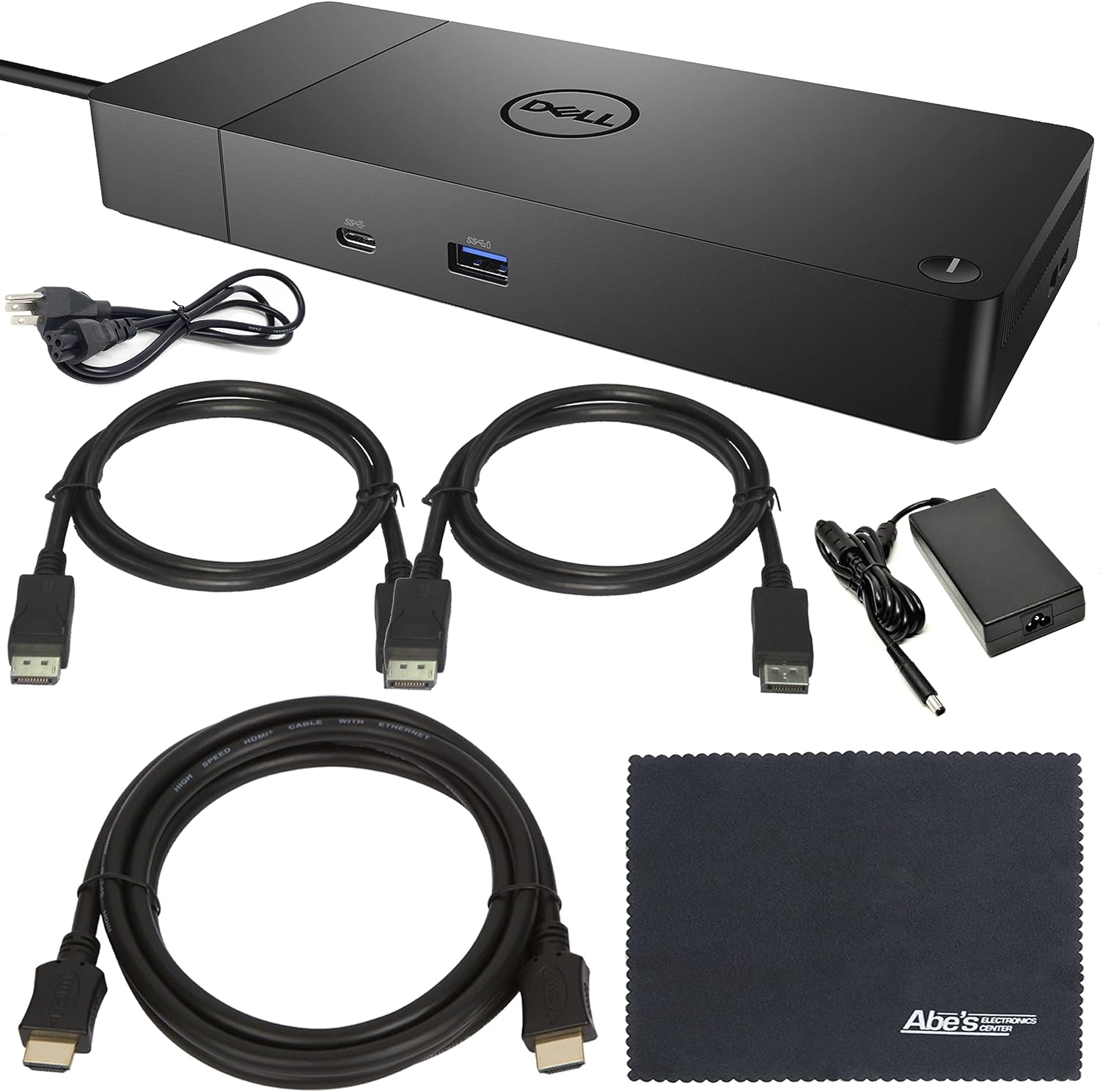
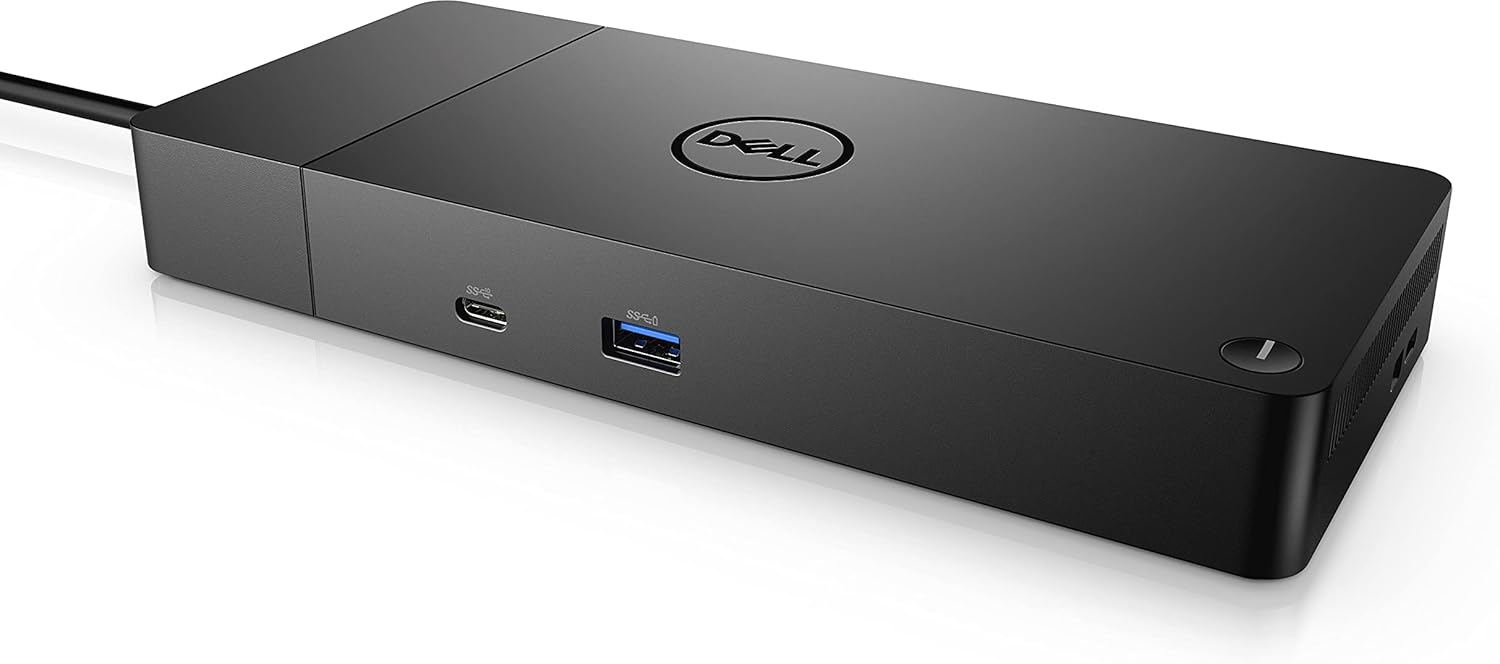
The Dell Performance Dock WD19S is a USB-C docking station with five USB ports (3x USB 3.1 Gen 1 Type-A, 2x USB 3.1 Gen 1 Type-C), three video outputs (2x DisplayPort, 1x HDMI), Gigabit Ethernet, and 90W power delivery to the connected laptop through a 130W power adapter. It supports a maximum resolution of 5120×2880 at 60Hz, connects via a single USB-C cable, and includes both Noble Wedge and Kensington security slots for physical theft prevention. This particular listing (B098XS5B7C) is a bundle that includes the dock, the 130W power adapter, and a ZoomSpeed Essentials Kit. At 1.29 lbs and 8.07 x 3.54 x 1.14 inches, the dock is compact enough to fit into most desk setups without taking up significant space.

USB Connectivity: Five Ports Across Two Types
The dock provides five USB ports: three USB 3.1 Gen 1 Type-A and two USB 3.1 Gen 1 Type-C. The Type-A ports cover legacy peripherals like keyboards, mice, flash drives, and external hard drives. The two Type-C ports add connectivity for newer devices, including USB-C storage drives, phones, and modern peripherals that use the USB-C connector.
All five ports run at USB 3.1 Gen 1 speeds, which provides data transfer rates up to 5Gbps. This is fast enough for external storage, backup drives, and most peripheral connections. For users who currently juggle between multiple adapters to connect USB-A and USB-C devices to their laptop, having both types available on one dock simplifies the setup.
| Port Type | Count | Speed / Feature |
|---|---|---|
| USB 3.1 Gen 1 Type-A | 3 | 5Gbps data transfer |
| USB 3.1 Gen 1 Type-C | 2 | 5Gbps data transfer |
| DisplayPort | 2 | Up to 5120×2880 @ 60Hz |
| HDMI | 1 | External display output |
| RJ45 Gigabit Ethernet | 1 | 1000Mbps wired networking |
| USB-C Host Connection | 1 | Single cable to laptop |
| Noble Wedge Slot | 1 | Physical security lock |
| Kensington Slot | 1 | Physical security lock |

Dell Performance Dock WD 19S WD19S Docking Station (WD19S130W) with 130W Power Adapter and 90W Power Delivery + ZoomSpeed Essentials Kit Black
Display Output: Up to 5K Resolution
The dock offers three video outputs: two DisplayPort connections and one HDMI port. The maximum supported resolution is 5120×2880 at 60Hz, which covers 5K single-monitor setups. For dual-display configurations, the two DisplayPort ports and HDMI port provide flexibility in how you connect monitors depending on what inputs your displays have.
For professionals running dual 4K monitors or a single 5K display, the Dell WD19S has the bandwidth to handle it. The three video ports also mean you can mix and match: two DisplayPort monitors for your primary workstation and an HDMI connection for a projector or presentation display when needed.

Power Delivery: 130W Adapter, 90W to Laptop
The bundle includes a 130W power adapter. Of that 130W, up to 90W is delivered to your laptop through the USB-C host connection. The remaining wattage powers the dock itself and its connected peripherals. 90W is enough to charge most Dell business laptops and many other USB-C laptops at full speed while monitors and peripherals are active.
For laptops that require more than 90W (larger workstation-class laptops, for example), the dock will still charge the battery, but at a reduced rate that may not keep up with heavy workloads. Check your laptop’s power requirements against the 90W delivery to confirm it meets your needs.
Gigabit Ethernet
The RJ45 Gigabit Ethernet port provides a wired network connection at up to 1000Mbps. For laptops that rely on WiFi, adding a wired connection through the dock delivers more consistent speeds and lower latency. This benefits video conferencing, large file transfers, remote desktop connections, and any workflow where WiFi drops or congestion would cause disruption.
In office environments where network reliability is critical, a wired Ethernet connection through the dock ensures stable connectivity regardless of how congested the WiFi network becomes. For remote workers connecting through VPN, a wired connection often provides a more stable tunnel than WiFi.
Physical Security: Dual Lock Slots
The dock includes both a Noble Wedge slot and a Kensington security slot. This dual-lock design is aimed at office and enterprise environments where docking stations sit on shared desks and need protection against theft. Having two different lock standards means IT departments can use whichever lock type they’ve already standardized on across the organization.
Bundle Contents: ZoomSpeed Essentials Kit
This specific listing (B098XS5B7C) is sold as a bundle that includes the Dell WD19S dock, the 130W power adapter, a USB Type-C host cable, and a ZoomSpeed Essentials Kit. The ZoomSpeed kit is a third-party addition from the seller (brand listed as AOM, not Dell) that includes accessories to complement the dock’s functionality. The core Dell WD19S dock and its specifications are the same as the standalone Dell product.
Pros and Cons
What Stands Out
- Five USB ports (3x Type-A, 2x Type-C) cover both legacy and modern peripherals
- Three video outputs (2x DisplayPort, 1x HDMI) for flexible multi-monitor configurations
- 5120×2880 max resolution at 60Hz supports up to 5K single-display setups
- 130W adapter with 90W laptop charging through a single USB-C cable
- Gigabit Ethernet for stable wired networking
- Dual physical security slots (Noble Wedge and Kensington)
- Compact at 8.07 x 3.54 x 1.14 inches and 1.29 lbs
- Single USB-C cable connection to laptop handles display, data, power, and network
- ZoomSpeed Essentials Kit included in this bundle
What Could Be Better
- 90W power delivery may be insufficient for larger workstation laptops
- Listed under third-party brand (AOM), not directly from Dell
- No SD or microSD card reader
- No audio/headphone jack listed in the specifications
- USB 3.1 Gen 1 (5Gbps) across all ports, no Gen 2 (10Gbps) option
- ZoomSpeed kit contents not clearly specified in the listing
Who Is This Dock For?
Dell laptop users in business environments are the primary audience. The WD19S is part of Dell’s business dock lineup, designed to pair with Dell Latitude, Precision, and XPS models. The single-cable USB-C connection, multi-monitor support, and dual security slots fit corporate workstation requirements.
Professionals who need multi-monitor setups with up to 5K resolution. Two DisplayPort connections plus HDMI provide enough video outputs for dual 4K or single 5K configurations, covering the needs of designers, developers, financial analysts, and project managers.
IT departments standardizing on one dock model across an office. The compact form factor, dual security locks, and USB-C host connection make deployment and management straightforward. The 90W power delivery charges most business laptops at full speed during use.
Remote and hybrid workers who want a single-cable desk experience at home that matches their office setup. Plug in one USB-C cable and gain access to monitors, peripherals, Ethernet, and charging.
This dock is not the right choice if your laptop requires more than 90W charging and you need full-speed power delivery through the dock, if you need SD card readers, or if you prefer buying directly from Dell rather than a third-party bundle seller.
Final Verdict
The Dell WD19S Performance Dock delivers the essential features business users need: five USB ports, triple video outputs with 5K support, 90W laptop charging, Gigabit Ethernet, and physical security, all through a single USB-C connection in a compact, lightweight body. It’s a proven dock from Dell’s established WD19 lineup, now bundled with a 130W power adapter and ZoomSpeed Essentials Kit in this listing.
The 90W power delivery is the main consideration for buyers with power-hungry laptops, and the third-party seller listing means warranty support may differ from buying directly from Dell. For business users and remote workers who need a reliable multi-monitor dock with solid power delivery and a clean single-cable desk setup, the Dell WD19S remains a dependable choice in the USB-C docking station market.
Disclosure: As an Amazon Associate, I earn from qualifying purchases.
Docking Station Intelligence
The standards are confusing by design. These three panels decode what manufacturers won’t explain clearly. Applicable to every docking station.
The USB-C Confusion Matrix
The USB-C connector is the single greatest source of buyer confusion in docking stations. The physical plug looks identical whether it carries USB 2.0 at 480 Mbps or Thunderbolt 5 at 120 Gbps — a 250x difference in capability hidden behind the same shape. Manufacturers exploit this by labeling everything "USB-C compatible" without specifying which protocol runs through it. Two docks can look identical on the outside and behave completely differently once you plug them in.
The hierarchy matters because it determines everything: how many monitors your dock can drive, how fast files transfer, whether your laptop charges while docked, and whether you need third-party drivers. Here is the real capability ladder, from slowest to fastest:
The practical takeaway: if your laptop has Thunderbolt 4, buy a Thunderbolt dock. If it only has generic USB-C, verify whether it supports DisplayPort Alt Mode before buying anything with multi-monitor claims. Our buying guide walks through verification steps for every major laptop brand.
Power Delivery: What the Watts Mean
Power Delivery (PD) determines whether your docking station can charge your laptop while you work, or whether you need a separate charger cluttering your desk. The math is simple but rarely explained: your laptop draws a specific wattage under load, and the dock must match or exceed it. If the dock delivers less than your laptop needs, the battery slowly drains even while plugged in — defeating the purpose of a docking station entirely.
Most ultrabooks need 45–65W. Standard business laptops need 65–100W. Gaming and workstation laptops can demand 100–140W or more. The dock’s advertised PD wattage is the maximum it can deliver to your laptop — but this drops if you charge other devices (phones, tablets) through the dock simultaneously. Always leave a 15–20W margin above your laptop’s requirement.
Check your laptop’s original charger wattage — that’s your baseline. Our FAQ covers how to find this for every major brand.
Native Display vs DisplayLink: The Hidden Factor
This is the decision most buyers don’t know they’re making. When a docking station outputs video to your monitors, it uses one of two fundamentally different methods: native (the dock passes your laptop’s GPU signal directly to the monitor) or DisplayLink (the dock compresses video over USB and a software driver renders it). The difference is invisible in marketing materials but profoundly affects your daily experience.
Native output through DisplayPort Alt Mode or Thunderbolt uses your laptop’s actual graphics hardware. There is zero added latency, full DRM support for streaming services, no CPU overhead, and no driver to install. DisplayLink, by contrast, adds 5–15ms of latency (noticeable in video calls and cursor movement), blocks DRM content on connected monitors (Netflix, Disney+ show black screens), consumes 3–8% of your CPU constantly, and requires a driver that Apple’s macOS security updates occasionally break.
DisplayLink exists for one reason: Apple Silicon base chips (M1, M2, M3) can only drive one external display natively. If you need two or more monitors on a base MacBook Air or 13” MacBook Pro, DisplayLink is your only option. For everyone else — Windows users, Mac Pro/Max chip users, Intel/AMD laptops — native is always the better choice.
Native (Alt Mode / Thunderbolt)
DisplayLink (USB compression)
The bottom line: if your laptop supports native multi-display output, always choose a native dock. DisplayLink is a workaround, not an upgrade. See our glossary for detailed definitions.
COMMAND CENTERCOMMAND CENTER
Six tools that decode the confusion manufacturers create. Port protocols, power budgets, display configurations, compatibility, desk planning, and future-proofing. Full buying guide →
Port Protocol DecoderWhat does your connection type actually support? Glossary
Power Delivery CalculatorCan this dock keep your laptop charged?
Display Configuration PlannerCan your dock push enough pixels?
Laptop-to-Dock CompatibilityWill this dock work with YOUR laptop?
Desk Setup ArchitectWhat ports do you actually need?
Select everything you need to connect: